
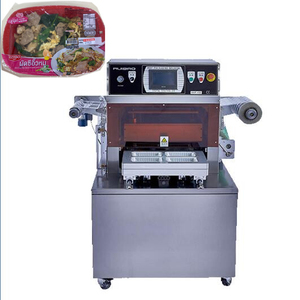
Nitrogen Flushing Tray Sealer for Fresh Meat & Sausages
Integrates high-vacuum evacuation with high-purity nitrogen backflushing. Designed for rigid plastic trays containing fresh meats, processed sausages, and ready-to-eat meals.
Contact Us

Expert knowledge, equipment selection advice, and technical trends in VFFS, Doypack, Multilane, and Flow Wrap systems.
Modern industrial food, pharmaceutical, and chemical manufacturing demand rigorous modified atmosphere packaging (MAP) to prevent lipid oxidation, preserve aromatic compounds, and eliminate microbial degradation. Integrating precision nitrogen gas flushing systems into high-speed packaging equipment lowers residual oxygen ($O_2$) levels below 1.0% (and under 0.5% in specialized micro-dosing systems). This whitepaper provides B2B buyers, plant operations directors, and procurement leaders with an unvarnished audit of top suppliers, technical benchmark metrics, future technological trends, and procurement strategies for 2025–2030.
Explore our top-performing industrial gas-flushing packaging solutions engineered for VFFS, tray sealing, continuous band sealing, doypack pouches, and rigid container lines.
Integrates high-vacuum evacuation with high-purity nitrogen backflushing. Designed for rigid plastic trays containing fresh meats, processed sausages, and ready-to-eat meals.
Contact Us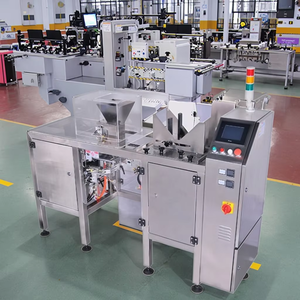
Specialized linear packing line for stand-up zipper pouches (food-grade plastic & kraft paper). Retains volatile aromatic coffee oils via dual gas lance injection.
Contact Us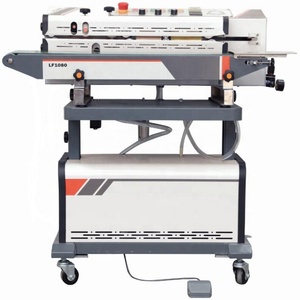
Multifunctional continuous heat sealer equipped with synchronized $N_2$ injection nozzle and solid-ink/embossing coder for snack foods, pharmaceuticals, and chemicals.
Contact Us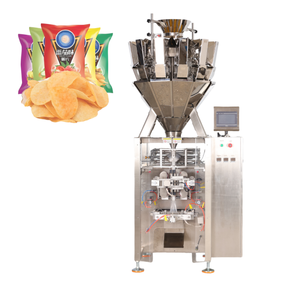
Industrial vertical form-fill-seal system optimized for fragile snack foods. Creates protective gas cushions while keeping residual oxygen under strict control.
Contact Us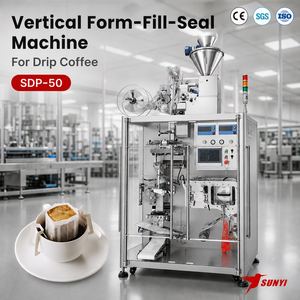
High-precision drip bag machine running at 60 bags/min. Features multi-point nitrogen purging system, ultrasonic sealing, and thermal transfer printer integration.
Contact Us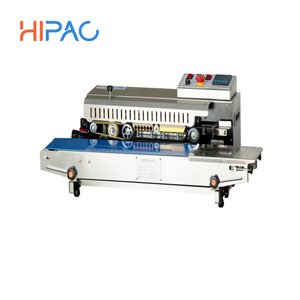
Heavy-duty inflatable bag sealer engineered for bulk bakery, nuts, and puffed grains. Delivers high-volume nitrogen displacement for extended shelf-life protection.
Contact Us
Versatile seam-sealing system for aluminum cans, PET bottles, and tinplate containers. Combines nitrogen liquid dosing/gas flushing with hermetic seaming heads.
Contact Us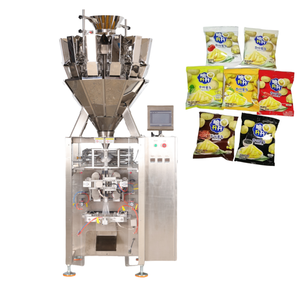
Compact footprint vertical packaging solution with intelligent PLC control. Ideal for small-format snack bags requiring precise gas dosing and ultra-low film scrap rates.
Contact UsThe decay of packaged dry foodstuffs, roasted coffee beans, dairy powders, and fresh protein products stems primarily from two biochemical factors: oxidative rancidity of free fatty acids and aerobic microbial respiration (molds, bacteria, and microaerophilic pathogens). Atmospheric air comprises approximately 78.08% Nitrogen ($N_2$), 20.95% Oxygen ($O_2$), 0.93% Argon ($Ar$), and 0.04% Carbon Dioxide ($CO_2$). In standard atmospheric packaging, oxygen triggers degradation within days or weeks.
Nitrogen flushing works via physical volumetric displacement. By purging the package cavity with food-grade gaseous Nitrogen ($N_2 \ge 99.9\%$) immediately prior to thermal sealing, the partial pressure of oxygen is drastically depressed. Nitrogen is an inert, tasteless, odorless, non-reactive gas with extremely low solubility in water and lipid phases, rendering it the ideal balance gas for structural integrity and shelf-life extension.
A comparative evaluation of leading machinery builders based on engineering capacity, residual oxygen control, modular flexibility, and global support reach.
| Manufacturer Name | Primary HQ Region | Core Machine Focus | Residual $O_2$ Capability | Target Industries | Global Service Coverage |
|---|---|---|---|---|---|
| SIA Concordia | Europe / Global | VFFS, Doypack, Multilane, Tray Sealers | < 0.5% (Ultra-Low) | Food, Pharma, Chemical, Beverage | 80+ Countries (Direct Field Service) |
| Ishida Co., Ltd. | Japan | Integrated Multihead Weigher & VFFS | < 1.0% | Snacks, Confectionery, Fresh Produce | Global Network |
| Bosch Packaging (Syntegon) | Germany | High-Speed Flow Wrap & Vertical Systems | < 0.5% | Pharmaceuticals, Premium Foods | Worldwide Enterprise Support |
| Multivac Group | Germany | Thermoforming & Tray Sealing MAP Lines | < 0.3% | Fresh Meats, Poultry, Cheese, Medical | 140+ Subsidiaries |
| ULMA Packaging | Spain | Horizontal Flow Wrap & Shrink Packaging | < 1.0% | Produce, Bakery, Meat & Dairy | Global Distributor Network |
| Fuji Machinery | Japan | Horizontal Servo Flow Wrappers | < 0.8% | Bakery, Medical, Snack Foods | Asia, Americas, Europe |
| ILAPAK (COESIA Group) | Switzerland | VFFS & Modified Atmosphere Flow Wrappers | < 0.8% | Salads, Bakery, Cheese, Spices | Global Reach |
| Matrix Packaging (ProMach) | USA | Vertical Form Fill Seal Machinery | < 1.0% | Frozen Foods, IQF, Granules | North America & Selected Regions |
| Nichrome Packaging Solutions | India | Multilane Sachets & Powder VFFS | < 1.5% | Dairy Powders, Spices, Grains | Asia, Africa, Middle East |
| PFM Packaging Machinery | Italy | High-Speed Doypack & Flow Wrapping | < 0.6% | Confectionery, Pet Food, Coffee | Global Subsidiaries |
Key technological shifts shaping B2B packaging equipment procurement over the next decade.
Traditional destructive needle testing (analysers checking sample bags every 30 minutes) is rapidly being replaced by non-destructive laser-based fluorometric sensors embedded directly inside the sealing jaw assembly. Modern machines provide continuous 100% inline quality verification, automatically rejecting pouches that exceed preset residual threshold limits without slowing production down.
Global environmental regulations (such as EU packaging waste directives) require a transition away from hard-to-recycle PET/Aluminium Foil/PE laminates toward Mono-PE or Mono-PP structures. Because mono-materials exhibit narrower sealing temperature windows and altered gas permeability properties, next-generation gas flush packaging machinery features ultra-precise pulse-sealing and servo-controlled dwell times to guarantee hermetic seals without film distortion.
Industrial gas costs represent a major portion of operational expense (OpEx) for MAP lines. Advanced machines integrate proportional mass flow controllers that dynamically adjust $N_2$ injection flow rates according to line speed, bag volume changes, and product bulk density. This smart throttling minimizes wasted gas escape into the atmosphere during machine idling or film splice changes.
Procurement teams are prioritizing packaging machines equipped with IoT edge gateways, OPC-UA protocols, and cloud-connected PLC platforms. Plant engineers can remotely monitor $N_2$ consumption per thousand packages, track thermal jaw stability, diagnose solenoid valve actuation delays, and receive predictive maintenance alerts before component failure compromises seal integrity.
With over two decades of engineering excellence, SIA Concordia operates state-of-the-art manufacturing facilities spanning 20,000+ square meters. Our dedicated R&D engineering teams design, build, and deploy custom packaging machinery tailored to complex production environments across 80+ countries worldwide.
Answers to essential technical, financial, and operational questions regarding nitrogen flush packaging systems.
Speak with our senior packaging engineering specialists to evaluate your product sample, analyze shelf-life requirements, and select the optimal gas flush system for your facility.