Packaging Machine Industry Blog – SIA Concordia
Packaging Technology News – SIA Concordia
Industry Insights & Guides

Packaging Machine Blog & News

Expert knowledge, equipment selection advice, and technical trends in VFFS, Doypack, Multilane, and Flow Wrap systems.

Custom OEM Beverage Bottling Machine Manufacturers & Exporter

Next-Generation Industrial Liquid Filling, Form-Fill-Seal & High-Speed Packaging Automation Engineered for Global Beverage, Dairy, & Liquid Food Producers

Industrial Product Portfolio

High-Performance OEM Beverage Bottling & Liquid Packaging Lines

Engineered to strict 3-A Sanitary, EHEDG, and CE machinery compliance standards. Our smart bottling and automated flexible packaging machines feature ultra-precise servo dosing, CIP cleanability, and modular expansion capabilities.

Mini Type Automatic VFFS Packaging Machine Liquid Dosing

Mini Type Automatic VFFS Liquid & Beverage Pouch Machine

Compact vertical form-fill-seal architecture designed for artisanal fruit juice, cold-brew coffee, and functional shot pouches. High precision peristaltic pump integration ensures drip-free seal integrity.

Output Speed:30 - 80 bpm
Filling Accuracy:±0.5%
Dosing Technology:Servo Piston/Pump
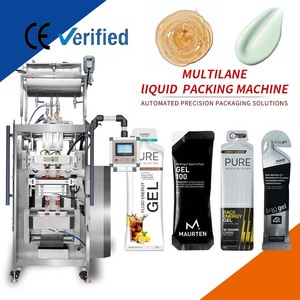
Automatic 2 Lane Irregular Shaped Sachet Liquid Packaging Machine

Automatic 2-Lane Dual-Track Liquid Sport Gel & Beverage Machine

Specialized multi-lane vertical packaging system engineered for contoured energy gel pouches, viscous liquid concentrates, and electrolyte drink mixes featuring custom laser-die scoring.

Output Speed:60 - 140 ppm
Pouch Style:Custom Ergonomic
Control System:Siemens S7-1500 PLC
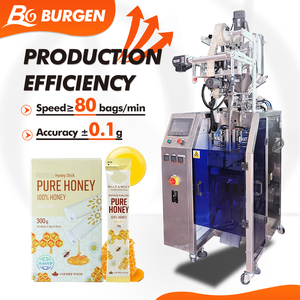
Single Lane Pop Stick Ice-cream VFF Liquid Packaging Machine

Single-Lane High-Speed Liquid Beverage & Pop Stick Machine

Designed for freezable liquid treats, honey drinks, and single-serve liquid concentrates. Features continuous rotary sealing jaws and sanitary SS316L liquid pathways.

Output Speed:40 - 90 bpm
Material Standard:Sanitary SUS316L
Sealing Type:3-Side / Stick Seal
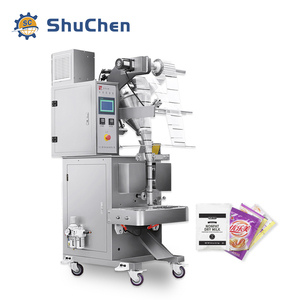
VFFS Vertical Auger Filler Powder Beverage Packing Machine

VFFS Vertical Powder Beverage & Instant Drink Packaging Line

Integrated auger-dosing system designed for instant milk tea powders, coffee premixes, protein drink powders, and nutraceutical solubles with nitrogen-flush deoxygenation.

Residual O2 Level:< 1.0% (N2 Flush)
Dosing Range:5g - 1000g
HMI Interface:10-Inch Color Touch
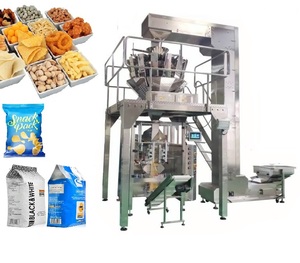
Multihead Weighing Beverage Ingredient Packaging Machine

Multi-Head Weigher Beverage Solid & Freeze-Dried Ingredient Line

High-precision 10/14-head combination weighing platform optimized for freeze-dried fruit tea bits, boba pearls, herbal tea botanicals, and instant soup toppings.

Weighing Accuracy:±0.1g - 0.5g
Bucket Capacity:1.6L / 2.5L
Max Speed:120 dumps/min
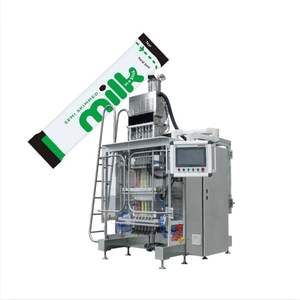
High Speed Multilane Stick Liquid Beverage Packing Machine GMP

High-Speed Ultra-Clean Multilane Liquid Beverage Stick Machine

GMP-compliant 6 to 12-lane stickpack system capable of speeds up to 400 PPM. Engineered for commercial syrup dosing, concentrated juice shots, and oral liquid beverages.

Output Speed:Up to 400 ppm
Sanitary Standard:cGMP / EHEDG
Lane Count:4 - 12 Lanes Custom
Multi Function VFF Pouch Packaging Machine Liquid Beverage

Multi-Function VFF Beverage Pouch & Flexible Liquid System

Versatile packaging machinery capable of switching between pillow bags, gusseted stand-up pouches, and quad-seal bags for dairy drinks, plant-based milk, and beverage bases.

Format Flexibility:Pillow / Gusset / Quad
Film Material:Laminated / Recyclable
Filling Temp:Up to 92°C Hot-Fill
Automatic 3kg Liquid Paste Chili Seasoning Beverage Sauce Machine

Automatic Large-Capacity (3kg) Beverage Syrup & Liquid Filler

Heavy-duty linear piston filling and packaging line tailored for bulk commercial beverage syrups, concentrated purees, dairy creams, and foodservice liquid ingredients.

Fill Volume:500g - 5000g
Viscosity Range:1 - 50,000 cPs
CIP Integration:Fully Automated CIP
20+
Years Engineering Expertise
80+
Countries Exported
±0.2%
Volumetric Filling Precision
99.4%
OEE Production Efficiency
Executive Industry Whitepaper

Global Beverage Bottling Equipment: Strategic Procurement & Technical Trends (2025–2030)

An engineering analysis of modern liquid packaging dynamics, aseptic processing advances, servo-motion integration, and Total Cost of Ownership optimization for commercial beverage production.

1. Paradigm Shifts in Beverage Bottling Architecture: Hot-Fill vs. Cold Aseptic Filling

The global beverage manufacturing landscape is undergoing a systemic transition driven by consumer demand for preservative-free, clean-label beverages, functional botanical waters, and sensitive dairy-alternative drinks. Historically, Thermal Hot-Filling (85°C–92°C) was the benchmark for shelf-stable acid beverages. However, thermal stress degrades heat-sensitive vitamins, fresh flavor profiles, and requires heavyweight PET bottle walls to prevent thermal collapse.

Modern procurement strategies overwhelmingly favor Cold Aseptic Bottling Technology. By sterilizing the container (via Peracetic Acid vapor or H2O2 dry fog) and dosing liquid at ambient temperatures (20°C–25°C) within an ISO Class 5 cleanroom enclosure, OEM bottling lines reduce PET resin consumption by up to 35% through lightweight bottle designs while locking in natural nutrients and sensory characteristics.

Electromagnetic Mass Flowmeter Dosing

Replacing mechanical piston pumps with non-contact Magnetic Inductive (Mag) or Coriolis Mass Flowmeters eliminates internal seals, reducing product shear force, preventing cross-contamination, and enabling sub-milligram filling accuracy across variable viscosities.

Modular Monoblock Integration

Integrating Rinser-Filler-Capper (RFC) functionality into a synchronized monoblock pitch frame minimizes footprint by 40%, eliminates intermediate conveyor transfer points, and lowers airborne contamination risk during container movement.

Smart IoT & Predictive OEE Analytics

Embedded Edge PLC sensors track torque degradation in capping heads, valve response times, and vibration spectra in real time. Automated cloud telemetry alerts maintenance engineers to micro-stoppages before costly downtime occurs.

Engineering Benchmark: Bottling Line Technology Comparison Matrix

Performance Metrics Mechanical Gravity Bottling Piston Volumetric Bottling Servo Magnetic Flowmeter Bottling Cold Aseptic Monoblock Line
Target Beverage Types Water, Non-Carbonated Juices Viscous Syrups, Pulp Juices Isotonic Drinks, Clear Beverages Sensitive Dairy, Plant-Based Milk, Tea
Filling Speed Range 2,000 – 12,000 BPH 1,500 – 8,000 BPH 6,000 – 36,000 BPH 12,000 – 48,000 BPH
Dosing Precision ±1.5% Volume ±0.5% Volume ±0.2% Mass/Volume ±0.15% Mass/Volume
CIP/SIP Integration Manual Clean Down Semi-Automated CIP Full Automated Closed CIP Sterile Automated CIP / SIP
Format Changeover Time > 90 Minutes approx 45 Minutes < 15 Minutes (HMI Recipe) < 10 Minutes (Tool-less)
Resin Lightweighting Potential Low (Standard Bottle) Moderate High Ultra-High (Lightweight rPET)
Strategic Procurement Guide

Key Factors When Sourcing Custom OEM Beverage Bottling Lines

For procurement officers, plant engineering directors, and co-packers, evaluating capital equipment requires looking far beyond upfront CapEx. Below are the key engineering metrics that govern long-term profitability and operating efficiency.

1. Total Cost of Ownership (TCO) & Energy Efficiency

While initial equipment cost represents a single capital outlay, operational expenditures (power, compressed air, water flush cycles, and replacement wear components) dictate 75% of machine lifecycle cost over a 10-year span. Superior OEM designs utilize direct-drive servo motors rather than pneumatic actuators, lowering compressed air energy overhead by up to 28%.

2. Sanitary Design & CIP/SIP Validation Compliance

Preventing bacterial contamination in high-pH and low-acid beverage filling is critical. OEM bottling equipment must feature zero dead-leg fluid circuits, electro-polished SS316L liquid contact surfaces (Ra < 0.4µm), PTFE/EPDM food-grade elastomers, and automated Clean-In-Place (CIP) spray balls that maintain turbulent flow velocites (> 1.5 m/s) to guarantee microbial cleanliness.

3. Tool-less Container & Closure Versatility

Consumer packaged goods (CPG) packaging formats evolve rapidly. Equipment buyers must prioritize modular bottling machines featuring quick-change starwheels, tool-less height adjustment spindles, and programmable servo capping heads capable of handling PET, Glass, HDPE, aluminum cans, or pouch formats on a single flexible main deck.

Why Partner With Us

Enterprise Capabilities & OEM Manufacturing Leadership

As a premier custom OEM beverage bottling machine manufacturer and global exporter, we combine 20+ years of mechanical innovation with turnkey system integration expertise.

CE & ISO 9001 Certification

Rigorous quality control frameworks certified under ISO 9001:2015 standards. All electrical systems comply with CE Directives, UL listing specifications, and IP65 washdown protection ratings.

Bespoke OEM / ODM Engineering

From custom filling valve geometries for pulp-laden juice to specialized conveyor synchronization, our 50+ R&D engineering staff customize equipment precisely to your floorplan.

Global Export & On-Site Service

With deployed lines across 80+ countries, we provide complete global installation, commissioning, local operator training, and 24/7 remote augmented-reality technical support.

Turnkey Bottling Line Solutions

Complete end-to-end integration spanning water treatment, syrup preparation tanks, aseptic filling, cap sorters, bottle labeling, shrink-wrapping, and robotic palletization.

Frequently Asked Questions

Beverage Bottling Machine Sourcing FAQ

Answers to common technical, operational, and procurement queries raised by engineering executives and equipment buyers.

Q: What determines the choice between volumetric piston filling and magnetic flowmeter filling?

Volumetric piston fillers rely on mechanical displacement, making them economical and suitable for high-viscosity products with thick particulate solids (e.g., sauces, pulpy syrups). Magnetic Flowmeter (Mag-meter) fillers use non-contact electromagnetic flow measurement, offering superior speed, micro-precision (±0.2%), and zero moving parts in the liquid pathway. Flowmeters are ideal for conductive free-flowing liquids like water, juice, dairy, and isotonic beverages, offering faster CIP turnaround times.

Q: How do your beverage bottling lines handle hot-fill vs. cold aseptic liquids?

Our OEM bottling machines are customized based on thermal specifications. Hot-fill lines utilize thermal-expansion-compensated filling valves, heat-recirculation loops to maintain constant product temperatures above 85°C, and heat-resistant stainless steel. Aseptic lines incorporate laminar airflow enclosures, HEPA filtration (Class 100), automated chemical bottle/cap sterilization systems, and sterile air positive pressure zones to process sensitive beverages without thermal degradation.

Q: What sanitation certifications and hygiene standards do your machines adhere to?

All fluid contact components are manufactured from certified AISI 316L stainless steel with surface roughness polished to Ra < 0.4 µm. Piping design follows 3-A Sanitary Standards and EHEDG guidelines to eliminate dead legs where bacteria can harbor. Non-metallic components utilize FDA-compliant PTFE, Viton, or EPDM seals. The entire line is engineered for automated CIP/SIP (Clean-in-Place / Sterilize-in-Place) sequences.

Q: What is the standard lead time for a fully customized OEM bottling line?

Standard standalone modular filling or packaging units typically ship within 45 to 60 days post-drawing sign-off. Complex, fully integrated OEM turnkey bottling lines (combining blowing, filling, capping, labeling, and packing) require approximately 90 to 120 days. Accelerated production tracks are available for standard platform configurations.

Q: Can a single bottling machine process both PET plastic and Glass bottle formats?

Yes. We offer dual-format combi bottling machines equipped with dual capping turrets (crown caps for glass bottles and screw caps for PET bottles). Quick-change handling parts (starwheels, neck-grippers, and bottle guide plates) allow complete container format changeovers in under 20 minutes without specialized hand tools.

Q: How is equipment installation, commissioning, and staff training handled globally?

Every exporter purchase includes comprehensive factory acceptance testing (FAT) prior to shipment. Upon delivery, senior field service engineers deploy to your site to perform physical installation, electrical hookup, site acceptance testing (SAT), and line balancing. We provide thorough multi-lingual operational and maintenance training for your plant technicians to maximize line OEE from day one.

Ready to Elevate Your Beverage Packaging Operations?

Speak with our senior application engineers to receive custom line layouts, detailed technical proposals, and complete machinery catalogs tailored to your specific product parameters.

Get Catalog