


Packaging Machine Blog & News
Expert knowledge, equipment selection advice, and technical trends in VFFS, Doypack, Multilane, and Flow Wrap systems.
Core Integrated Machinery & Packaging Systems
Seamless integration from primary bagging/sachet packaging to downstream robotic palletizing cells.
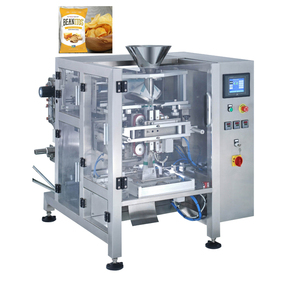
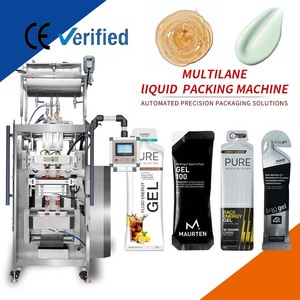
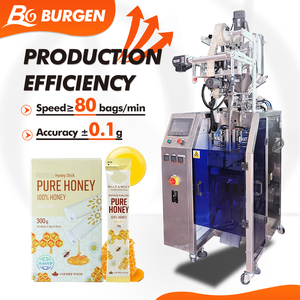
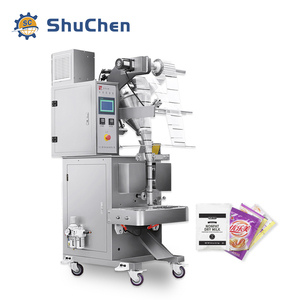
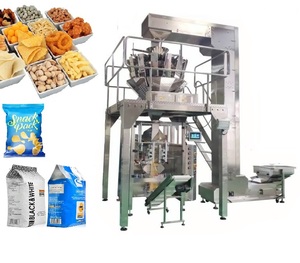
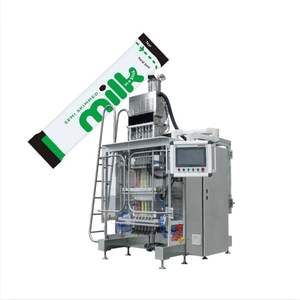
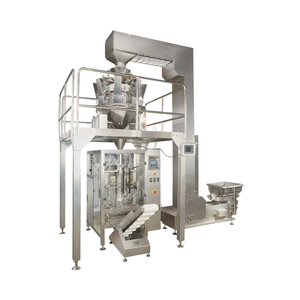
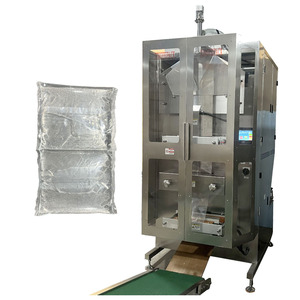
Industrial Whitepaper: The Evolution & OEM Procurement Architecture of China Wholesale Robotic Palletizer Systems
In modern industrial manufacturing, end-of-line packaging lines serve as the final critical gateway between manufacturing execution systems (MES) and global supply chain logistics. As global manufacturing transitions toward Industry 4.0 paradigms, the demand for flexible, high-throughput, and energy-efficient China wholesale robotic palletizer systems has expanded exponentially. Modern factories no longer view palletizing as an isolated mechanical stacking process; rather, it represents an intelligent cyber-physical node capable of dynamic workload allocation, automated pattern calculation, and real-time inventory synchronization.
Sourcing directly from OEM manufacturers and specialized engineering factories in China provides international buyers with a strategic competitive edge—combining European-grade kinematic performance, custom End-of-Arm Tooling (EOAT) versatility, and substantial capital expenditure (CapEx) savings. This whitepaper comprehensively explores technical architectures, selection criteria, procurement trends, and integration strategies for decision-makers seeking high-performance robotic palletizing lines.
Key Engineering Takeaways for B2B Procurement Officers:
- Kinematic Versatility: Direct conversion from 4-axis articulated arms to high-speed 6-axis industrial robots allows multi-line payload management reaching up to 800 kg capacities.
- End-of-Arm Tooling (EOAT) Customization: Advanced pneumatic vacuum grids, mechanical clamp jaws, and servo-driven magnetic effectors accommodate diverse primary packages—including corrugated cartons, heavy-duty valve bags, shrink-wrapped trays, and liquid drums.
- Upstream Packaging Integration: Direct synchronization with high-speed Vertical Form Fill Seal (VFFS) systems, multi-head weighers, and automatic case packers eliminates production bottlenecks.
Kinematic Classification & Data Matrix: Comparing Palletizing System Architectures
Selecting the optimal robotic palletizing architecture requires a thorough understanding of mechanical kinematics, floor footprint limits, cycle speed mandates, and product handling fragility. Below is a comparative technical data matrix evaluating the four dominant industrial palletizing configurations engineered by top-tier Chinese machinery factories:
| Robot Architecture Type | Max Payload Range | Speed (Cycles/Min) | Kinematic Flexibility | Footprint Requirement | Ideal Industry Applications |
|---|---|---|---|---|---|
| 4-Axis Articulated Robot Arm | 100 kg – 800 kg | 12 – 25 cycles/min | High (360° Rotation) | Compact (2.5m x 2.5m) | Heavy-duty bagged grains, cement, chemical drums, multi-case stacking. |
| 6-Axis Heavy-Duty Industrial Robot | 50 kg – 500 kg | 10 – 18 cycles/min | Maximum (Complex orientation) | Medium (3.0m x 3.0m) | Intricate inter-locking pallet patterns, dynamic tote sorting, combined slip-sheet placement. |
| High-Speed Gantry / Cartesian Palletizer | 20 kg – 300 kg | 20 – 45 cycles/min | Linear (X-Y-Z Axes) | Large Overhead Rigging | Ultra-high-speed FMCG lines, beverage crates, fast-moving consumer packaging lines. |
| Collaborative Robot (Cobot) Cell | 5 kg – 25 kg | 6 – 12 cycles/min | High (Human-Safe operation) | Ultra-Compact (<2.0m x 2.0m) | Pharmaceutical sachets, boutique food packaging, low-footprint facility retrofits. |
Core Architectural Modules of Modern Robotic Palletizing Systems
A fully automated wholesale robotic palletizer system manufactured in specialized Chinese factories consists of several tightly integrated sub-systems engineered for continuous 24/7 industrial duty cycles:
Robotic Arm Kinematic Unit
High-tensile cast alloy arm structures powered by Japanese/European servo drives (Beckhoff, Yaskawa, Siemens) delivering position repeatability down to ±0.05 mm.
Intelligent EOAT Gripper Head
Modular End-of-Arm Tooling featuring independent vacuum zones, pneumatic side-clamps, bottom-support forks, and integrated slip-sheet pickup heads.
3D Vision & Sensor Tracking
AI-driven 3D vision perception system providing dynamic conveyor tracking, package orientation detection, and automatic stack correction.
PLC & HMI Software Interface
Intuitive industrial touchscreen graphics enabling custom pallet pattern generation without programming expertise, supporting OPC-UA and Ethernet/IP protocols.
Comprehensive Safety Enclosure
Compliant with ISO 13849 PLd and ISO 10218 safety standards, utilizing light curtains, safety interlocks, dynamic fencing, and collision detection sensors.
Pallet Conveying & Dispensing
Heavy-duty roller conveyors integrated with automatic pallet magazine dispensers and stretch wrapping stations for complete end-of-line integration.
Global Sourcing & Future Purchasing Trends for Robotic Palletizer Systems (2025–2030)
As international buyers re-evaluate supply chain resilience and manufacturing automation budgets, wholesale procurement of robotic palletizers from leading OEM factories in China is undergoing several structural shifts. Procuring engineers and factory owners should align their sourcing strategies with the following technology and market trends:
1. Transition Toward Modular "Plug-and-Play" Palletizing Cells
Traditional industrial robot installations required extensive on-site civil engineering, custom safety guarding fabrication, and weeks of software commissioning. Modern China wholesale manufacturers are rapidly standardizing modular palletizing cells. These units arrive pre-wired, pre-programmed, and mounted on integrated baseframes—reducing on-site deployment timelines from weeks to less than 48 hours.
2. Deep Integration with Primary Packaging (VFFS, Multilane, & Doypack Lines)
Modern factories demand end-to-end line synchronization. Upstream vertical form fill seal (VFFS) systems—such as high-speed multilane sachet packers, liquid pouch fillers, and auger-based powder packaging units—must communicate directly with the robotic palletizing controller. Real-time feedback loops dynamically adjust robot pick frequencies based on primary packaging output speeds, preventing line stoppages and buffering inventory efficiently.
3. Adoption of Cloud IIoT & Predictive Maintenance Analytics
Leading Chinese robotic OEM factories now integrate MQTT-enabled Industrial Internet of Things (IIoT) edge gateways directly into standard PLC cabinets. Factory managers can monitor Overall Equipment Effectiveness (OEE), motor temperature anomalies, pneumatic pressure drops, and cycle count metrics in real time via secure cloud dashboards—facilitating proactive component replacement before actual mechanical failure occurs.
4. Energy-Regenerative Drives & Sustainable Green Packaging Compatibility
Energy cost reduction is a top priority for global factory managers. Advanced 4-axis and 6-axis robotic controllers manufactured in China are increasingly incorporating regenerative servo drives that capture kinetic energy during arm deceleration phases, feeding electricity back into the plant power grid. Furthermore, soft-touch vacuum grippers are optimized to handle eco-friendly recycled corrugated boxes and ultra-thin flexible film packaging without causing structural damage.
Why Partner with SIA Concordia Manufacturing Base
SIA Concordia stands at the forefront of industrial packaging machine manufacturing and end-of-line robotic automation integration. With over 20 years of dedicated R&D expertise, our 20,000+ m² modern facility operates with over 500 skilled engineers and technicians dedicated to delivering world-class machinery solutions globally.
- International Quality Standard Compliance: Full CE marking, ISO 9001:2015 quality control systems, and FDA-standard electrical/mechanical safety certifications.
- Turnkey Engineering Capabilities: In-house CNC precision machining, kinematics simulation lab, custom EOAT prototyping, and full software integration.
- Global After-Sales Service Network: Dedicated field service engineers and technical support centers across 80+ countries providing rapid spare parts delivery and 24/7 technical hotline access.
- Proven Track Record: Trusted machinery supplier for Fortune 500 food processing, pharmaceutical, chemical, and personal care conglomerates worldwide.


Frequently Asked Questions (FAQ) – Procurement & Integration Guide
Address your technical evaluation requirements with these detailed insights compiled by SIA Concordia's senior automation engineering team:
Selection depends primarily on three variables: required throughput (cycles/min), payload weight, and flexibility requirement. 4-Axis Articulated Robots are the industry gold standard for standard case and bag palletizing (up to 25 cycles/min and 800 kg payloads). 6-Axis Robots are selected when complex package tilt/rotation or simultaneous slip-sheet and pallet handling is required within a single cell. Cartesian Gantry Systems are ideal for high-speed multi-line sorting where overhead space is available, handling high throughput across multiple pallet discharge stations.
Yes. Advanced 4-axis and 6-axis robotic arms equipped with long-reach kinematics (e.g., 2.8m to 3.2m reach radius) can be positioned centrally to service 2 to 4 incoming conveyor lines simultaneously. The robot controller utilizes queue-management software algorithms to dynamically prioritize pick-and-place actions based on upstream conveyor sensor inputs, placing different product types onto separate pallet stations without cross-contamination.
Direct factory procurement from China typical yields a CapEx savings of 40% to 60% compared to Western European or North American equipment OEMs, without compromising component quality (utilizing Schneider/Siemens electricals and Festo pneumatics). For a double-shift factory operation replacing 4 to 6 manual workers, the net payback period typically ranges between 8 to 14 months, accounting for reduced labor overhead, eliminated workplace injury compensation, and improved stacking consistency.
SIA Concordia manufactures both primary VFFS packaging machinery (stick packs, sachets, multihead weigher vertical baggers) and end-of-line robotic automation systems. We utilize unified PLC architectures (Siemens S7-1500 or Omron NJ series) across the entire line. Communication is established over high-speed Industrial Ethernet (Profinet / EtherCAT), ensuring handshake signals for line speed matching, emergency stop loops, and automated recipe changeovers are pre-tested at our factory prior to shipment.
All robotic palletizing systems undergo full Factory Acceptance Testing (FAT) in accordance with ISO 10218-1/2 (Robots and Robotic Devices) and ISO 13849-1 (Safety-related parts of control systems). Systems are equipped with dual-channel safety circuits, physical perimeter guarding, interlocked safety doors, and muting light curtains for pallet discharge. Electrical control panels strictly adhere to CE Low Voltage Directive (LVD) and EMC Directives, with UL-compliant panel wiring available upon request for North American deployments.
Optimize Your End-of-Line Automation Today
Partner with China's premier robotic palletizer system manufacturer. Contact SIA Concordia's engineering team for custom line layouts, ROI feasibility reports, and factory direct price quotes.