


Packaging Machine Blog & News
Expert knowledge, equipment selection advice, and technical trends in VFFS, Doypack, Multilane, and Flow Wrap systems.
High-Performance Wholesale MAP & VFFS Packaging Machinery
Explore our engineered line of Modified Atmosphere Packaging and Vertical Form-Fill-Seal systems built with precision gas displacement, servo-driven sealing, and smart PLC interfaces.
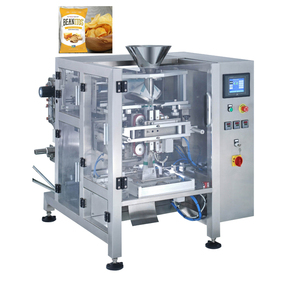
Mini Type Automatic VFFS Packaging Machine
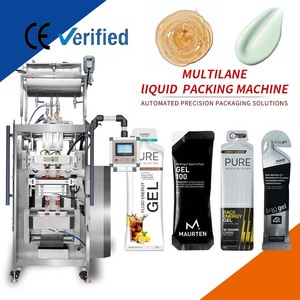
Automatic 2 Lane Irregular Shaped Sachet Liquid VFFS Machine
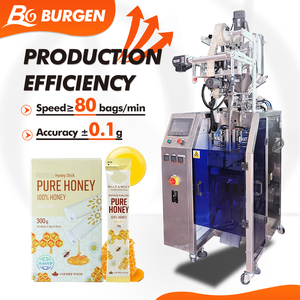
Automatic Single Lane Pop Stick Liquid Packaging Machine
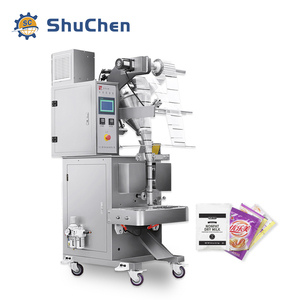
VFFS Vertical Auger Filler Powder Packing Machine
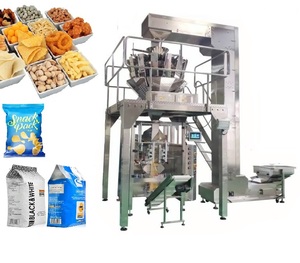
Multihead Weigher VFFS MAP Packaging System
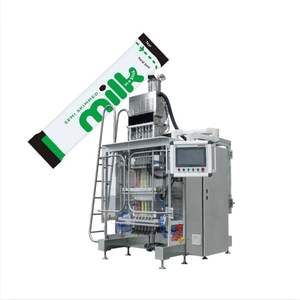
High-Speed Multilane Stick Sachet Powder Machine (GMP)
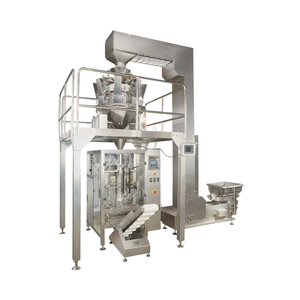
Multi-Function VFF Pouch Packaging Machine
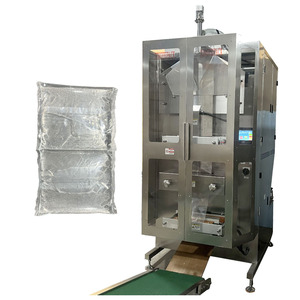
Automatic 3kg Paste & Sauce VFFS Packaging Machine
Industrial Modified Atmosphere Packaging (MAP): Technology, Physics & Manufacturing Standards
A comprehensive guide for global procurement heads, packaging engineers, and plant managers evaluating China's leading wholesale MAP equipment manufacturers.
| Gas Component | Primary Industrial Function | Target Application Sectors | Typical Gas Ratio Range |
|---|---|---|---|
| Carbon Dioxide ($\text{CO}_2$) | Inhibits aerobic bacteria and molds; dissolves into product matrix to create bacteriostatic effect. | Fresh Meats, Dairy, Ready-to-Eat Meals, Baked Goods | 20% – 80% |
| Nitrogen ($\text{N}_2$) | Inert filler gas; prevents package collapse, displaces residual oxygen, mitigates rancidity. | Potato Chips, Dried Fruits, Nuts, Milk Powder, Coffee | 50% – 99.9% |
| Oxygen ($\text{O}_2$) | Maintains fresh red oxymyoglobin color in red meat; sustains respiration in fresh produce. | Fresh Red Meat, Whole Fresh Fruits & Vegetables | 5% – 80% (High $\text{O}_2$ MAP) |
Core Gas Flush & Vacuum MAP Mechanical Architectures
1. Dynamic Gas Flushing (VFFS / Flow Wrap)
A continuous lance injects an pressurized stream of inert gas into the film tube immediately before heat sealing. Ideal for high-speed automated lines (80–300 PPM) such as snack foods, coffee sachets, and shredded cheese where residual oxygen levels of 1.0% to 2.0% are acceptable.
2. Vacuum Gas Backfill (Tray Sealing / Thermoforming)
The package is hermetically enclosed within a vacuum chamber, evacuated down to <5 mbar absolute pressure, and backfilled with a precise gas blend before immediate thermal sealing. Achieves ultra-low residual oxygen (<0.2%), vital for medical devices, fresh meat trays, and cooked foods.
3. Compensated Vacuum MAP (Rotary Premade Pouch)
Combines rotary premade pouch handling with multi-stage gas flushing or vacuum snouts. Delivers high aesthetic appeal with zipper closures, spouts, and stand-up Doypack formats while retaining strict residual gas control.
Future Procurement Trends for MAP Machinery (2025–2030)
How global enterprise buyers are aligning equipment specifications with emerging sustainability, automation, and digital quality monitoring standardizations.
1. Transition to Recyclable Monomaterial Films
Global environmental regulations (such as the EU Packaging and Packaging Waste Regulation) are pushing brands away from traditional non-recyclable multi-layer PET/ALU/PE films toward pure Mono-PE and Mono-PP laminates. Modern wholesale MAP machines must integrate ultra-precise digital temperature control ($\pm 0.5^\circ\text{C}$) and ultrasonic sealing jaws to seal high-barrier recyclable mono-materials without burning or seal-channel leaks.
2. In-Line Optical & Laser Oxygen Sensing
Off-line destructive needle sampling is rapidly being replaced by non-destructive, 100% in-line optical laser gas analysis. Next-generation MAP machinery sourced from China integrates spectroscopic sensors into the discharge conveyor, automatically ejecting packages that exceed target oxygen thresholds (>0.5% $\text{O}_2$) without slowing production line speeds.
3. Smart Gas Mixing & Dynamic Conservation
Rising industrial gas costs ($\text{N}_2, \text{CO}_2, \text{Ar}$) drive procurement directors to favor MAP equipment with intelligent gas-saving algorithms. Servo-controlled gas injection systems regulate flow rates dynamically based on real-time line speed, reducing total gas consumption by up to 35% annually compared to continuous mechanical purge systems.
4. Industry 4.0 IoT & Remote Telemetry
Modern overseas buyers expect OEM packaging machines to integrate seamlessly into MES and ERP systems. Standard configurations now include OPC-UA industrial protocol support, real-time HMI cloud monitoring, and remote optical maintenance gateways, allowing Chinese engineers to assist plant operators globally via encrypted cloud channels.
State-of-the-Art Development Trends in MAP Packaging Engineering
An engineering breakdown of mechanical, electrical, and pneumatic advancements shaping China's wholesale packaging machine manufacturing sector.
Key Technological Benchmarks of Modern MAP Machinery
Why Source MAP Machinery from SIA Concordia
Two decades of manufacturing excellence, rigorous quality engineering, and dedicated international service infrastructure.
20,000+ m² Manufacturing Facility
Our state-of-the-art production complex houses high-precision CNC machining centers, laser cutting systems, dynamic balancing rigs, and dedicated assembly bays capable of manufacturing over 500 machine units annually.
International Certification & Compliance
All SIA Concordia machinery fully complies with EU CE Directives, ISO 9001:2015 Quality Management Systems, and FDA food-contact standards, ensuring smooth customs clearance and industrial safety compliance worldwide.
Dedicated R&D & Customization Engineering
With a team of over 500 skilled engineers and technicians, we offer full OEM/ODM custom tooling, specialized gas flushing lances, multi-lane sachet configurations, and custom line integration support.
Frequently Asked Questions by International B2B Buyers
Clear, authoritative answers to critical engineering, operational, and commercial questions regarding Modified Atmosphere Packaging machinery.
Q1: How does a MAP machine differ from a standard Vacuum Packaging machine?
A standard vacuum packaging machine simply evacuates air from the package to create a vacuum seal, which can crush soft or delicate foods (such as bakery items or potato chips). A MAP machine evacuates air or flushes the pouch and backfills it with a precise protective gas mixture ($\text{N}_2, \text{CO}_2, \text{O}_2$), preserving internal product structure while inhibiting microbial growth and oxidation.
Q2: What residual oxygen levels can be guaranteed by SIA Concordia MAP machinery?
Depending on the machine architecture, our vertical form-fill-seal (VFFS) gas flushing models reliably achieve residual oxygen levels between 1.0% and 2.0%. For ultra-critical applications, our Vacuum Chamber Tray Sealers and Thermoforming MAP systems guarantee residual oxygen levels below 0.5% (and down to <0.1% with double evacuating cycles).
Q3: Which flexible packaging film structures are recommended for MAP?
MAP efficacy depends entirely on film barrier performance. We recommend multi-layer high-barrier flexible structures containing EVOH (Ethylene Vinyl Alcohol copolymer) or PVDC layers. Typical laminate examples include PET/EVOH/PE, PA/PE, and emerging recyclable Mono-PP films with high-barrier SiOx or AlOx coatings to maintain Oxygen Transmission Rates (OTR) under 2.0 $\text{cm}^3/\text{m}^2\cdot\text{day}\cdot\text{bar}$.
Q4: Can a single VFFS MAP machine handle multiple pouch sizes and gas blends?
Yes. Our VFFS and premade pouch machines feature quick-change forming collar assemblies and recipe-driven HMI touchscreen controls. Operators can store up to 100 product profiles adjusting fill volume, sealing temperature, gas flush timing, and gas blend ratios in seconds without mechanical teardown.
Q5: What is the typical lead time and Factory Acceptance Testing (FAT) protocol for wholesale orders?
Standard machine models are delivered within 30 to 45 business days. Customized turnkey production lines require 60 to 75 days. Every machine undergoes a rigorous 72-hour continuous test run (FAT) using customer-supplied materials, film roll stock, and target gas mixtures before export crating.
Q6: How is international post-sales commissioning and technical support handled?
We provide global on-site installation, commissioning, and operator training conducted by multi-lingual field service engineers. Furthermore, all machines feature IoT remote diagnostic modules allowing our factory engineers to troubleshoot PLC logic, calibrate servo parameters, and resolve operational issues remotely 24/7.