Packaging Machine Blog & News
Expert knowledge, equipment selection advice, and technical trends in VFFS, Doypack, Multilane, and Flow Wrap systems.
China Top Powder VFFS Packaging Machine Supplier?
Choosing a China top supplier requires more than comparing machine prices. Powder VFFS Packaging Machine performance depends on dosing accuracy, sealing stability, dust control, and after-sales support. A machine may look impressive in a showroom. Your powder may behave differently.
Grand View Research estimates that the global form-fill-seal machines market will continue growing through 2030, supported by automation and flexible packaging demand. PMMI’s industry reports also identify labor shortages, smart controls, and production efficiency as major investment drivers. These findings matter when evaluating Chinese manufacturers. Ask for measurable results, not attractive promises.
Packaging specialist Jorge Izquierdo of PMMI has stated, “Automation can help processors improve efficiency and address labor challenges.” His observation applies directly to powder lines, where manual handling can increase variation and cleaning time. However, automation is not a magic solution. Auger design, product density, humidity, and bag material still influence final performance.
A reliable supplier should provide factory testing, sample-based filling trials, electrical documentation, spare-parts planning, and operator training. Check whether the quoted speed remains stable with your actual powder. Request evidence for weight accuracy and seal integrity. Watch the powder cloud around the filling tube. Small details reveal engineering quality.
No supplier is perfect. Some published specifications may be optimistic. This guide compares China’s leading Powder VFFS Packaging Machine suppliers through practical criteria, including customization, compliance, technical expertise, delivery capability, and long-term service reliability.
What Is a Powder VFFS Packaging Machine?
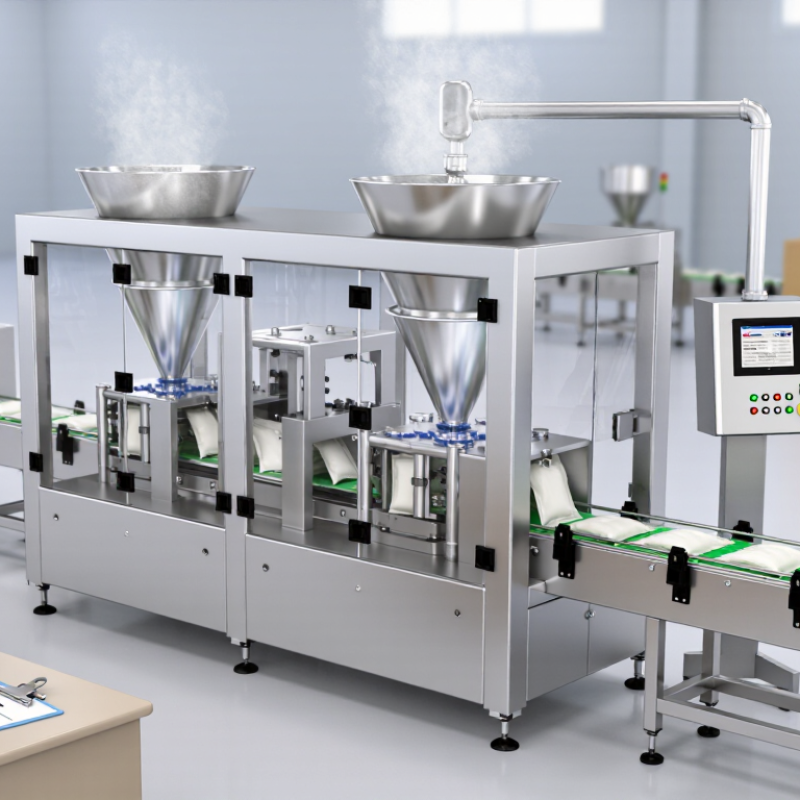
A powder VFFS packaging machine forms, fills, and seals bags from a continuous film roll. VFFS means vertical form-fill-seal. The film moves downward around a forming collar, creating a tube. A dosing system then releases powder into each pouch before heat sealing closes it. This compact process can reduce manual handling and keep production more consistent. PMMI reported that U.S. packaging machinery shipments reached approximately 10.2 billion dollars in 2022, showing strong demand for automated packaging equipment.
Powder products need specialized dosing, because their flow can change with moisture, particle size, and density. Auger fillers suit many fine powders, while net-weigh systems offer tighter weight control. A machine for flour may need different settings from one for instant drink powder. Dust control also matters. Poor sealing can leave powder on the seal area, causing leaks and rejected packs. Small details matter.
According to Grand View Research, the global vertical form-fill-seal machine market is expected to grow steadily through the decade, supported by demand for flexible packaging and automation. However, market forecasts are not factory guarantees. The first production estimate is rarely perfect. Buyers should test real powder samples, check fill accuracy, seal strength, cleaning access, and changeover time. A reliable supplier should provide documented test results, operator training, and service support, not only attractive machine photographs.
How Powder VFFS Machines Work in China
In China, a powder VFFS machine converts flat packaging film into filled, sealed pouches. VFFS means vertical form-fill-seal. The film travels from a roll through a forming collar. It becomes a tube around a dosing pipe. A vertical seal closes the back. Horizontal jaws create pouch bottoms and tops. The filler controls the powder dose. Common systems use augers, while load cells check weight. Fine powders behave differently. They may bridge, drift, or cling to steel surfaces. Good machine design must address these details, not only advertised speed.
During operation, an auger rotates inside a stainless-steel hopper. Its pitch and speed influence the delivered volume. Agitators help maintain an even powder level. Sensors track film marks, jaw position, temperature, and pouch length. A PLC coordinates these movements in fractions of a second. Dust extraction matters near the filling point. It protects seals and reduces cleaning time. However, extraction that is too strong can disturb light powder. Practical trials reveal more than a catalogue. Not every powder behaves perfectly.
When evaluating a Chinese supplier, request samples using your actual powder, film, and target weight. Check seal strength, weight variation, changeover time, and cleaning access. Ask for test data, calibration procedures, electrical documentation, and operator training. Reliable suppliers explain limits clearly. They should also provide spare-part guidance and remote service arrangements. A faster trial is not always better. A slower test may expose bridging, dust, or weak seals before installation. That evidence supports a more reliable purchasing decision.
Key Features of a Reliable Chinese Supplier
A reliable Chinese powder VFFS packaging machine supplier should understand more than machine speed. Fine powders behave differently from free-flowing products. They may bridge, create dust, or settle unevenly inside the forming tube. Experienced engineers should recommend auger fillers, dust control, servo-driven dosing, and suitable sealing materials. Ask for measured accuracy, output records, and test videos using your actual powder.
Professional suppliers provide clear drawings, electrical specifications, and traceable component lists. They should support factory acceptance testing before shipment. Check whether the supplier can adjust the machine for bag width, filling range, and local power requirements. Food-contact parts need suitable documentation. Electrical protection should match the destination market. Remote training, spare parts availability, and response time also matter. A polished website is not enough. No supplier is perfect, and unclear assumptions can still cause costly delays.
Tips: Send a representative powder sample. Request at least three test runs. Record filling accuracy, sealing strength, dust leakage, and changeover time. Ask for a written service schedule and warranty scope. Review customer references with similar products, not just impressive production figures. If the machine looks fast but cleaning takes hours, reconsider the real efficiency. Small details often decide daily reliability.
| Evaluation Dimension | Reliable Supplier Benchmark | What Buyers Should Verify | Why It Matters |
|---|---|---|---|
| Powder Dosing Technology | Servo-driven auger fillers are commonly used for flour, milk powder, spices, coffee powder, pharmaceutical powders and other free-flowing or moderately cohesive products. | Confirm auger diameter, filling range, hopper design, anti-bridging device and whether the dosing system can be tested with the buyer’s actual powder. | Powder density, particle size and flowability directly affect filling accuracy and machine stability. |
| Filling Accuracy | A properly configured auger system can commonly achieve approximately ±1% to ±2% filling accuracy under controlled conditions; actual performance depends on the product and target weight. | Request test results based on the required product, target weight, batch size and operating speed. Check whether results are measured by average weight or by every individual bag. | Accurate dosing reduces giveaway, improves package consistency and supports regulatory compliance. |
| Packaging Speed | Powder VFFS output is product- and bag-format-dependent. Many standard configurations operate within approximately 20–60 bags per minute, while higher speeds require suitable film, dosing and sealing conditions. | Compare guaranteed output with the exact powder, bag size, target weight, film type and sealing method rather than relying only on an empty-machine speed. | Real production capacity is often lower than the maximum mechanical speed shown in a catalogue. |
| Bag Formats | Common formats include pillow bags, gusseted bags, quad-seal bags and three-side-seal sachets, depending on the VFFS configuration and forming-collar design. | Confirm finished bag width, bag length, sealing pattern, film width, zipper or tear-notch options and the changeover procedure. | The selected bag structure affects material consumption, appearance, sealing reliability and retail suitability. |
| Film Compatibility | The machine should support the specified heat-sealable laminate or mono-material film within its designed thickness and web-width range. | Test the actual packaging film for tracking, unwinding, registration, sealing temperature and powder contamination during production. | Film friction, stiffness and sealing characteristics strongly influence wrinkles, leaks and registration errors. |
| Sealing Performance | A reliable system normally includes independently adjustable horizontal and vertical heat-sealing controls, temperature sensors and overload or jam protection. | Review seal-temperature control, sealing pressure, dwell time, seal inspection method and test results after extended operation. | Strong, clean seals protect powder products from moisture, leakage and contamination. |
| Product Contact Materials | Stainless steel 304 is widely used for food-contact machine parts; stainless steel 316 is often selected for more corrosive or demanding applications. | Request the material list for the hopper, auger, product chute, contact surfaces and fasteners. Confirm surface finish and cleanability requirements. | Correct materials support hygiene, corrosion resistance and long-term maintenance. |
| Control System | A modern VFFS machine typically uses a PLC, touchscreen HMI, servo motors for film feeding and recipe storage for repeatable settings. | Check language options, alarm history, password levels, recipe backup, remote-diagnostic capability and availability of replacement control components. | A well-designed control system simplifies operation, troubleshooting and format changeover. |
| Electrical Compatibility | Export machines are commonly configured for 220 V or 380 V, three-phase, at 50 Hz or 60 Hz, depending on the destination market. | Confirm the site voltage, frequency, phase, connected load, plug standard, compressed-air requirement and applicable local electrical regulations. | Correct utility specifications prevent installation delays and reduce electrical safety risks. |
| Dust Management | Powder applications benefit from enclosed transfer points, dust extraction interfaces, sealed bearings where appropriate and a cleanable machine frame. | Check dust-collection ports, hopper covers, discharge design, clean-in-place limitations and whether the machine has been tested with fine powders. | Effective dust control improves hygiene, operator safety, sealing quality and equipment reliability. |
| Hygienic Design | Key features include sloped or accessible surfaces, minimized powder traps, tool-free removal of selected contact parts and easy access for inspection. | Inspect photographs or drawings of the internal frame, hopper, auger assembly, film path and cleaning access points. | Good hygienic design reduces cleaning time and the risk of cross-contamination. |
| Quality Management | A supplier with a documented quality-management process should maintain incoming-material inspection, assembly records, wiring checks and final machine testing. | Request the applicable quality certificate, inspection checklist, test records, serial-number traceability and photographs of the finished machine before shipment. | Documented controls provide stronger evidence of consistent manufacturing than a product brochure alone. |
| Compliance Documentation | Export documentation commonly includes a user manual, electrical drawings, pneumatic diagrams, parts list, risk information and a declaration or certificate applicable to the destination market. | Confirm which documents are included, whether they are written in the required language and whether the machine configuration matches the documents. | Complete documentation supports customs clearance, installation, operator training and audits. |
| Factory Acceptance Testing | A professional supplier should be able to conduct a documented FAT using the customer’s product or a technically representative substitute before dispatch. | Define acceptance criteria for speed, weight accuracy, seal quality, bag dimensions, alarm functions, changeover time and continuous running. | FAT identifies performance gaps before the machine is shipped to the production site. |
| Spare Parts and Service | Standard support should include recommended start-up spare parts, electrical and mechanical part numbers, troubleshooting guidance and remote technical assistance. | Ask for a spare-parts list, response process, service hours, escalation procedure, software backup and availability of wear parts such as sealing elements and sensors. | Fast access to common replacement parts reduces unplanned downtime. |
| Installation and Training | A complete project plan should cover machine positioning, utilities, film loading, auger calibration, cleaning, operation, maintenance and safety procedures. | Clarify whether training is provided online, on-site or through technical documentation, and identify who is responsible for installation and commissioning. | Proper commissioning helps the equipment reach stable performance more quickly. |
| Supplier Transparency | A dependable Chinese supplier should provide clear technical specifications, machine drawings, configuration details, production milestones and commercial terms. | Compare the quotation with the final configuration and check whether items such as coding, dust extraction, conveyors, tooling, installation and spare parts are included or optional. | Transparent scope reduces hidden costs, specification disputes and delivery misunderstandings. |
| Total Cost of Ownership | Evaluation should include purchase price, packaging film waste, compressed-air consumption, electricity use, maintenance, spare parts, labor and expected downtime. | Request utility-consumption data and a recommended maintenance schedule based on the proposed machine configuration. | The lowest initial price does not necessarily produce the lowest cost per packaged bag. |
How to Evaluate Powder VFFS Machine Quality
China Top Powder VFFS Packaging Machine Supplier?
How to Evaluate Powder VFFS Machine Quality
A reliable powder VFFS machine should prove its performance, not merely display it. During a factory evaluation, request trials using your actual powder, package size, and target speed. Observe the auger filler closely. It should deliver stable weights across repeated samples. Check the weight records, not just the operator’s statement. Small errors can become expensive during long production runs.
Inspect the forming tube, sealing jaws, and film path by hand. Stainless steel surfaces should be smooth, cleanable, and free from sharp welds. Seals must remain even when powder dust reaches the sealing area. Ask for tests involving fine, sticky, or slightly humid powders. Real materials expose weaknesses quickly. A clean demonstration may hide them.
Review electrical protection, emergency functions, calibration methods, and maintenance access. The control system should show clear alarms and preserve useful production data. Ask how quickly common parts can be replaced. Technical drawings, inspection records, and a documented factory acceptance test add confidence. Supplier experience matters, but evidence matters more. No checklist is perfect. I once focused heavily on filling accuracy and overlooked film tracking, which later caused unnecessary waste. Leave time for operator training and a second trial before approving the machine.
Choosing the Right China Powder VFFS Supplier
The right China powder VFFS packaging machine supplier is not chosen by price alone. Start with powder behavior, including flowability, dust, moisture, and particle size. A reliable supplier should recommend the correct auger filler and forming tube.
Ask for measured filling accuracy, sealing strength, and packaging speed. These figures matter more than attractive catalog photos. Request videos using a powder similar to yours.
Review the machine structure carefully. Stainless steel contact parts should match your hygiene requirements. Check the load cells, dust extraction, servo system, and control interface.
Ask how operators clean the auger and sealing area. Factory acceptance testing is important. It should use your film and sample powder. However, test results may not represent every production condition. That limitation deserves honest discussion.
Spare parts, remote support, installation guidance, and response times also affect long-term reliability. A supplier with clear drawings and traceable inspection records shows stronger professional practice.
Tips
- Compare at least three technical proposals.
- Ask for a detailed tolerance range.
- Confirm film width and bag-size limits.
- Visit the factory if possible.
- Watch an actual filling test.
- Do not accept “zero maintenance” claims.
- Powder changes with humidity.
- Your team should plan cleaning, calibration, and regular sealing checks.
- A lower quotation can become expensive when training and spare parts are unclear.
FAQS
It forms bags from a film roll, fills them with powder, and heat-seals each pouch. The film moves downward around a forming collar. The process reduces manual handling and supports consistent production.
An auger rotates inside a stainless-steel hopper and delivers measured powder doses. Auger speed and pitch affect the delivered volume. Agitators help prevent uneven powder levels and bridging.
Flour, drink mixes, fine powders, and humid materials can behave differently. Moisture, particle size, density, and stickiness affect filling performance. One setting rarely suits every powder.
Fine powder can drift onto the sealing area and prevent proper bonding. Dust extraction helps keep the jaws clean. Excessive extraction may disturb very light powder. Trials tell the truth.
Use the actual powder, film, package size, and target weight. Check repeated weights, seal strength, pouch appearance, and production speed. A clean showroom test proves little.
Record weights from repeated samples instead of trusting a single reading. Compare variation across a longer run. Small errors can become costly during continuous production.
Examine the forming tube, sealing jaws, film path, welds, and product-contact surfaces. Smooth stainless steel is easier to clean. Sharp edges and poor access create maintenance problems.
Request test records, calibration procedures, electrical documents, training, spare-part guidance, and service arrangements. Ask for a documented factory acceptance test. Attractive photographs are not enough.
They may focus heavily on filling accuracy and overlook film tracking. Misaligned film can create waste, even with accurate dosing. I have made that mistake. A second trial can expose hidden problems.
Conclusion
A Powder VFFS Packaging Machine is a vertical form-fill-seal system designed to measure, fill, and seal powdered products in a continuous process. In China, these machines typically use a roll of packaging film to form bags, while an auger or other dosing system controls the powder volume. The machine can then complete sealing, cutting, and basic production monitoring, helping improve efficiency, consistency, and packaging hygiene.
When selecting a reliable Chinese supplier, buyers should examine machine materials, dosing accuracy, sealing performance, control systems, production speed, and compatibility with different powder characteristics. Quality evaluation should also include testing, inspection procedures, technical support, spare parts availability, and customization capabilities. The right Powder VFFS Packaging Machine supplier should provide clear specifications, stable manufacturing standards, responsive service, and practical solutions that match the product, package size, factory conditions, and long-term production requirements.

Blog Tags: