Choosing a Flow Wrap Packaging Machine is not simply a matter of comparing prices and production speeds. The right decision begins with understanding your product, packaging material, factory space, and daily output. A biscuit line may need different sealing control from a medical accessory line. Fresh products can also require gentler handling and stricter hygiene routines.
Start with the product dimensions. Measure its length, width, height, weight, and shape, including small variations between batches. Then review the required film type, seal temperature, cutting accuracy, and changeover time. A machine that runs perfectly during a demonstration may struggle with dusty products, soft materials, or frequent size changes. Ask suppliers for test samples using your actual product and film. Real testing reveals more than a polished brochure.
Operator experience matters. Clear controls, guarded moving parts, accessible cleaning areas, and reliable fault alerts can reduce avoidable downtime. Check the machine’s maximum speed, but do not treat that figure as your expected output. Sustainable production speed is often lower after loading, inspection, film changes, and maintenance are included. It is easy to overlook this.
Evaluate spare-part availability, training, warranty terms, and local technical support before signing an agreement. Food-contact applications may also require documented materials and suitable sanitation procedures. Standards vary by market, so confirm current requirements with qualified local professionals. No machine is perfect. Your decision should balance performance, safety, budget, and future flexibility. A careful choice today can prevent expensive modifications tomorrow.
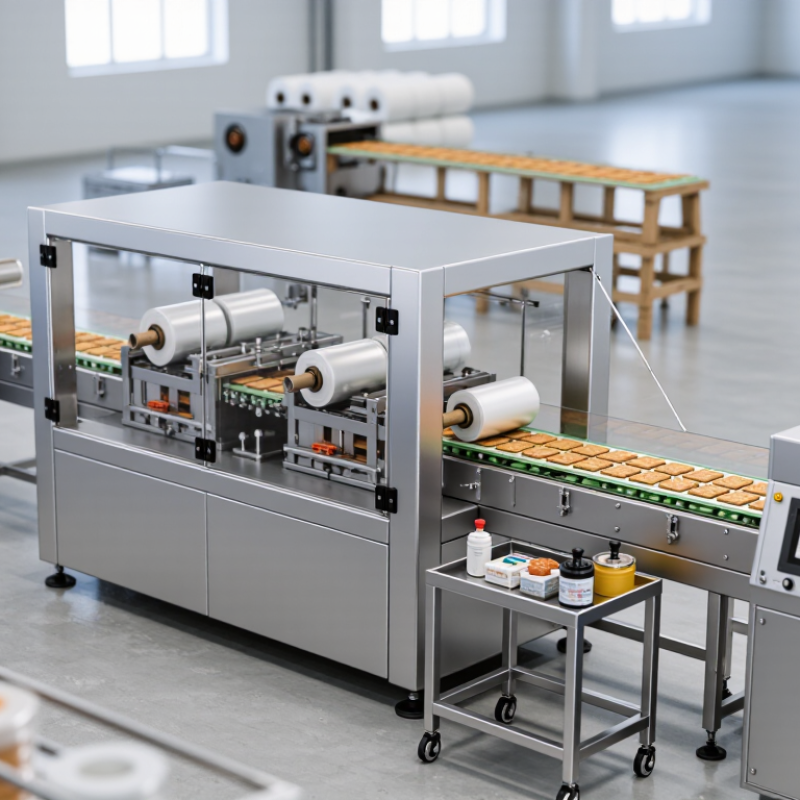
Define Product, Packaging, and Production Requirements
How to Choose a Flow Wrap Packaging Machine?
Choosing a flow wrap packaging machine starts with the product, not the machine brochure. Record its length, width, height, weight, shape, and surface condition. A soft pastry behaves differently from a rigid bar. Products with crumbs, oil, or sharp corners may need controlled feeding and stronger film handling. Test the product at its coldest and warmest normal conditions. Small changes in stiffness can affect alignment and sealing. Do not rely on one sample. Production batches are rarely that consistent.
Define packaging requirements in measurable terms. Specify film type, thickness, roll width, print registration, seal strength, and appearance. Decide whether the pack needs a tight pillow shape, easy opening, or protection from moisture and oxygen. Check the product’s contact area before selecting seal temperatures. A narrow seal may look neat but leave little tolerance for dust. During practical trials, inspect wrinkles, leaks, crushed edges, and film tracking. Keep dated samples. Memory is a poor quality record.
Production requirements complete the decision. Calculate packs per minute, operating hours, changeover frequency, floor space, and operator skill. Include feeding equipment, date coding, inspection, and rejected-pack handling. Ask how quickly the machine reaches stable speed, not only its maximum speed. Fast for ten minutes is not enough. Maintenance access matters, as does cleaning time. Before approval, run representative products through a realistic trial. Record stoppages and adjustment time. I would also challenge my assumptions: cheaper film may create more waste, while an oversized machine may sit idle. Reliable selection comes from measured trials, clear specifications, and honest production data.
How to Choose a Flow Wrap Packaging Machine?
Define the product dimensions, packaging format, and production target before selecting a flow wrap machine. The example below compares realistic planning requirements for several common product types without using company or brand data.
Compare Flow Wrap Machine Types and Sealing Methods
Choosing a flow wrap packaging machine starts with the product, not the machine’s speed. Horizontal flow wrappers suit biscuits, soap bars, trays, and other firm products. Intermittent-motion models pause during sealing, making them practical for varied pack lengths. Continuous-motion machines run smoothly at higher speeds, but they need steadier product spacing. Servo-driven systems improve positioning accuracy, especially when products have delicate surfaces or uneven shapes.
Sealing method affects appearance, strength, and waste. A fin seal places the film edges together, creating a raised seam on the pack. A lap seal overlaps the film edges and can produce a flatter profile. Hot-jaw sealing works well with many heat-sealable films, while ultrasonic sealing may help when heat exposure could damage the product. I have found that film temperature, dwell time, and pressure must be tested together. Changing only one setting can create weak seals or wrinkled packaging.
Check the machine’s forming collar, infeed design, and sealing range before buying. A narrow infeed may crush soft bakery products. A poorly matched collar can leave excessive film around small items. Ask for sample trials using your actual product and packaging material. Measure seal strength after storage, handling, and temperature changes. Some specifications look impressive on paper. Real production conditions can disagree. That is where many purchasing decisions need a second look.
How to Choose a Flow Wrap Packaging Machine? Compare Flow Wrap Machine Types and Sealing Methods
| Machine Type |
Operating Principle |
Typical Speed Range |
Typical Product Applications |
Main Advantages |
Limitations |
Best Suited For |
| Intermittent-Motion Flow Wrapper |
The film advances, stops while the product is sealed and cut, and then indexes forward again. |
Approximately 30–100 packs per minute, depending on product size, film, and machine configuration. |
Bakery products, confectionery, hardware items, medical disposables, and products requiring careful positioning. |
Good control of product placement; suitable for irregular or delicate products; generally lower initial investment. |
Lower output than continuous-motion systems; stop-and-start movement can reduce efficiency at very high speeds. |
Small to medium production runs and products needing accurate registration. |
| Continuous-Motion Flow Wrapper |
The film, sealing jaws, and product feed move continuously during forming, sealing, and cutting. |
Approximately 80–250 packs per minute, depending on product dimensions and configuration. |
Snack foods, biscuits, fresh produce, household goods, and high-volume consumer products. |
High throughput; smooth product flow; reduced mechanical shock; efficient for long production runs. |
Higher purchase cost; more demanding setup; less suitable for products that cannot tolerate continuous movement. |
High-volume operations with stable product dimensions and consistent feeding. |
| Servo-Driven Flow Wrapper |
Servo motors independently control product feeding, film registration, sealing jaws, and cutting timing. |
Approximately 60–300 packs per minute, depending on the number of lanes and product format. |
Multi-format food packaging, promotional packs, products with printed registration marks, and applications requiring frequent changeovers. |
High positioning accuracy; flexible recipe control; precise cut-off length; easier synchronization with automatic feeders. |
Higher capital cost; requires trained operators and more advanced maintenance support. |
Manufacturers needing flexibility, repeatable quality, and fast format changes. |
| Box-Motion Flow Wrapper |
The sealing jaws travel in a rectangular or “box” motion, allowing longer dwell time while maintaining continuous product movement. |
Approximately 80–220 packs per minute, depending on the package format and sealing requirements. |
Fragile bakery products, products that require gentle handling, and packages needing stronger or more consistent seals. |
Longer sealing dwell; gentler product handling; suitable for thicker or more difficult-to-seal films. |
More complex mechanism; larger footprint; usually higher maintenance requirements than basic intermittent machines. |
Delicate products and applications requiring reliable seals at moderate to high speed. |
| Multi-Lane Flow Wrapper |
Several product lanes are formed and wrapped in parallel before or during the sealing process. |
Approximately 150–600 total packs per minute, depending on the number of lanes and product size. |
Small confectionery items, sachet-style products, snack portions, and high-output multipack formats. |
Very high total output; efficient use of floor space when products are small and uniform. |
More complicated feeding and changeover; unsuitable for large or highly irregular products. |
High-volume production of small, consistently sized products. |
| Sealing Method |
How It Works |
Common Film Structures |
Typical Temperature or Energy Requirement |
Key Benefits |
Important Considerations |
Typical Applications |
| Heat-Sealed Fin Seal |
The longitudinal edges of the film overlap or meet beneath the product and are sealed by heated forming elements. |
Polypropylene-based films, polyethylene-based films, laminates, and coated barrier films. |
Usually requires controlled heated surfaces; many heat-sealable films operate broadly within approximately 120–200°C, depending on film construction. |
Widely used; compatible with many flexible films; provides a familiar package appearance and good production flexibility. |
Requires correct temperature, pressure, and dwell time; contamination in the seal area can cause leaks or weak seals. |
Biscuits, snacks, bakery goods, hardware, household products, and general retail packaging. |
| Heat-Sealed Lap Seal |
The longitudinal film edges overlap on one side of the package and are bonded using heated rollers or sealing elements. |
Heat-sealable mono-material films, coated films, and laminated barrier structures. |
Uses controlled heat, pressure, and dwell time; the required temperature depends on the film’s sealant layer. |
Creates a clean side seal; can reduce the visible fin beneath the package; works well with selected recyclable film structures. |
Requires accurate film tracking and suitable film coating; not every film is designed for lap sealing. |
Products where appearance, compact side sealing, or specific film compatibility is important. |
| Hot-Wire or Hot-Knife Sealing |
A heated wire or blade seals and separates the film, often producing a narrow seal and cut in one operation. |
Films with suitable heat-seal and cutting characteristics, including some polyethylene-based structures. |
Uses direct thermal energy; temperature must be matched to film thickness and sealing behavior. |
Compact sealing area; can provide a neat cut; useful for selected thin or lightweight films. |
Film sensitivity can lead to burn-through, distortion, or weak seals if settings are incorrect. |
Lightweight products and packaging formats requiring a narrow seal profile. |
| Ultrasonic Sealing |
High-frequency mechanical vibrations generate localized heat at the seal interface, bonding compatible thermoplastic layers. |
Thermoplastic films and selected mono-material or laminated structures containing compatible sealant layers. |
Uses vibration energy rather than continuously heated sealing jaws; actual settings depend on material, thickness, amplitude, and pressure. |
Can seal through small amounts of product contamination; reduced external heat exposure; quick start-up and potentially lower energy use. |
Higher equipment cost; film structure must be compatible; sealing width and speed may be more limited for some applications. |
Products that may contaminate the seal area, heat-sensitive products, and selected recyclable packaging formats. |
| Cold-Seal Adhesive Sealing |
Pressure activates a cohesive coating on the film, allowing the package to close without heated sealing jaws. |
Specially coated cold-seal papers and polymer films. |
Requires pressure rather than external sealing heat; storage conditions and coating properties affect performance. |
Low heat exposure; fast sealing; suitable for chocolate and other heat-sensitive products. |
Requires dedicated coated film; coating direction and storage conditions must be controlled; seal strength may differ from heat seals. |
Chocolate bars, ice cream novelties, confectionery, and heat-sensitive products. |
Selection note: Actual speed, sealing temperature, film compatibility, and package quality depend on product dimensions, film structure, sealant layer, package length, feeding accuracy, and required shelf life. Always confirm settings through machine trials and seal-strength testing.
Evaluate Speed, Size, Materials, and Automation Features
Choosing a flow wrap packaging machine starts with the product, not the advertised speed. A machine rated at 150 packs per minute may slow sharply with irregular products, frequent film changes, or weak sealing conditions. PMMI reported that U.S. packaging machinery shipments reached about $10.2 billion in 2023, with automation remaining a major investment driver. That growth reflects real labor pressure, but speed alone can create waste.
Measure the product length, width, height, and spacing before requesting quotations. Leave enough forming-room for products with crumbs, condensation, or fragile edges. Material selection matters too. Polypropylene, polyethylene, laminates, and recyclable structures require different sealing temperatures and jaw pressures. Ask suppliers for trial runs using your actual film and product. The result may be less impressive than a brochure. That is useful evidence.
Tips:
Compare good packs per minute, not empty-machine speed. Check changeover time with a stopwatch. Review servo control, automatic film tracking, photo-eye accuracy, touchscreen diagnostics, and data logging. PMMI’s industry research repeatedly links connected equipment with better visibility and reduced unplanned downtime. Still, automation cannot correct poor maintenance or inconsistent product feeding. Request seal-integrity tests, reject-rate records, operator training, and spare-parts access. A compact machine may fit the floor plan, yet limit future pack sizes. Leave practical room for growth.
Check Machine Compatibility, Safety, Maintenance, and Space
Choosing a flow wrap packaging machine starts with compatibility, not speed.
Confirm film width, seal temperature, product dimensions, and target pack rate. A machine may handle a sample product but fail with a softer, taller, or irregular item. Test the real product, including its worst-case variation.
Packaging Machinery Manufacturers Institute reports that U.S. packaging machinery shipments exceeded 10 billion dollars in 2023, showing how quickly automation is expanding. Yet more automation does not fix poor product-machine matching.
Safety deserves a physical inspection. Check guarding, emergency stops, access doors, hot-seal areas, and film-threading points. The International Labour Organization estimates 2.78 million work-related deaths globally each year. That figure makes small design shortcuts harder to dismiss. Operators should reach routine controls without leaning across moving belts. I would also question unclear warning labels. They often look acceptable during installation, then confuse new staff.
Maintenance planning should include tool-free access, spare heating elements, sensor diagnostics, and cleaning time.
The U.S. Department of Energy reports that preventive maintenance can reduce costs by 12–18% compared with reactive maintenance. Keep records of seal-jaw wear and temperature drift. Space is another practical test. Measure the footprint, film roll clearance, operator walkway, electrical access, and future service area. Leave room behind the machine. We often underestimate it. A layout drawing is useful, but a taped floor mock-up reveals awkward movement, blocked exits, and surprisingly poor visibility.
Assess Total Cost, Supplier Support, and Future Expansion
Choosing a flow wrap packaging machine requires more than comparing purchase prices. Calculate total cost across five years: machine, tooling, film waste, electricity, maintenance, labor, and downtime. PMMI’s 2024 State of the Industry report places U.S. packaging machinery shipments at roughly 11 billion dollars, showing how strongly manufacturers continue investing in automation. However, a cheaper machine may create higher costs through slow changeovers or frequent stops.
Ask suppliers for verified performance data from similar products. Request recorded output speed, seal integrity results, film consumption, and average changeover time. One overlooked hour of downtime can affect a full production shift. Very quickly. Supplier support matters just as much. Check technician response times, spare-parts availability, training hours, and remote diagnostic capability. A clear service agreement is more useful than attractive sales language.
Future expansion should shape today’s specification. The machine should allow additional sealing stations, coding systems, inspection equipment, or automated feeding. PMMI’s 2023 report highlights labor constraints and automation as continuing packaging investment drivers. Choose open communication interfaces and accessible machine layouts, even if they cost more initially. Still, expansion forecasts are often optimistic. Recheck your volume assumptions every year. Ask for a realistic upgrade quotation, not only a theoretical promise. A practical evaluation should include three supplier references, a factory acceptance test, and a written five-year cost model. Mistakes happen. Document them before purchasing.
Conclusion
Choosing the right Flow Wrap Packaging Machine begins with a clear understanding of your product, packaging material, production volume, and desired presentation. Consider the product’s size, shape, fragility, and required shelf-life protection before comparing machine types and sealing methods. A suitable system should provide the right balance of speed, accuracy, package dimensions, film compatibility, and automation for your operation.
It is also important to evaluate machine compatibility, operator safety, maintenance requirements, installation space, and ease of adjustment. Beyond the initial purchase price, review energy use, replacement parts, training, technical support, and long-term operating costs. Selecting equipment that can handle future product variations or production growth can improve flexibility and reduce the need for early replacement. A careful evaluation of performance, reliability, total cost, and expansion potential will help you choose a packaging solution that supports efficient and consistent production.