Packaging Machine Industry Blog – SIA Concordia
Packaging Technology News – SIA Concordia
Industry Insights & Guides

Packaging Machine Blog & News

Expert knowledge, equipment selection advice, and technical trends in VFFS, Doypack, Multilane, and Flow Wrap systems.

0%

Choosing the right Granule Packaging Machine begins with the product, not the brochure. Granules may look similar, yet their behavior can differ sharply. Plastic pellets, coffee beans, seeds, fertilizer, and pet food require different feeding methods. Some flow smoothly. Others bridge, crumble, or create dust. That difference affects accuracy, speed, sealing, and cleaning time.

Jorge Izquierdo, Vice President of Market Development at PMMI, has said, “Automation is no longer a luxury; it is a necessity for many manufacturers.” His point deserves careful interpretation. Automation should solve a production problem, not decorate a quotation. A reliable machine should match your target weight, bag style, production volume, and available floor space. Multihead weighers suit irregular granules and demanding accuracy. Volumetric cup systems may offer simpler operation for consistent materials. Auger fillers can help with smaller, more controlled particles.

Small details matter. Watch a live demonstration. Bring your actual granules. Check whether dust settles around the sealing jaws. Test the machine after several hours, not only during a polished trial. Ask how quickly operators can change bag sizes. Ask about calibration records, spare parts, software support, and cleaning access. The best Granule Packaging Machine is not always the fastest model. It is the one that remains accurate on a busy Monday morning.

There is room for doubt. A higher filling speed can reduce accuracy. A cheaper machine can increase maintenance costs. These trade-offs are easy to overlook. Review production data, safety requirements, and supplier references before deciding. Practical evidence should outweigh impressive claims.
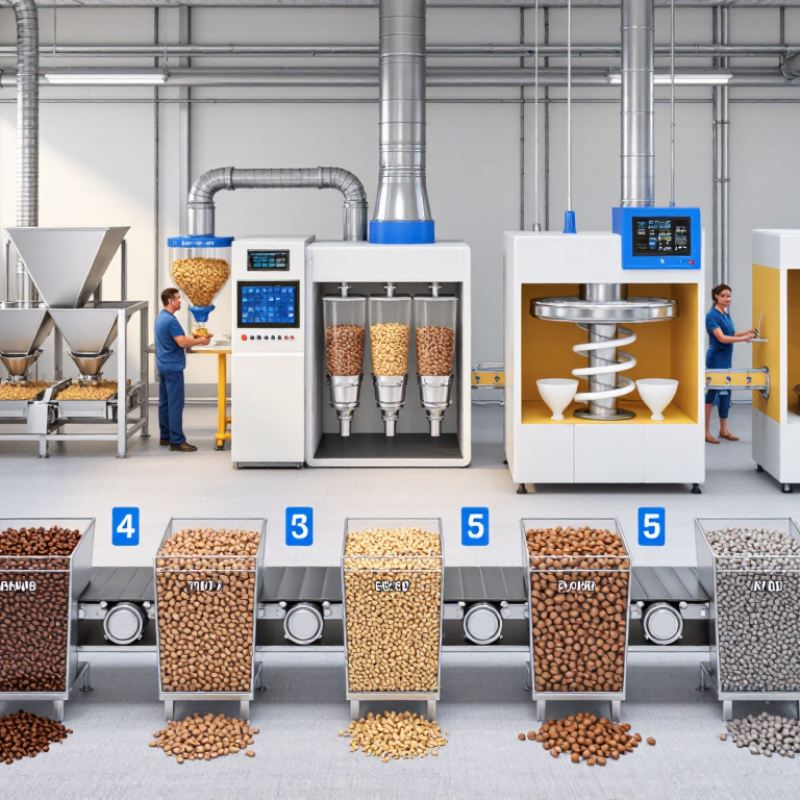
How to Choose the Best Granule Packaging Machine?

Define Product, Packaging, and Production Requirements

How to Choose the Best Granule Packaging Machine?

Choosing a granule packaging machine begins with defining the product clearly. Record particle size, bulk density, moisture, flowability, and dust levels. Test whether the granules flow evenly through a hopper. Some materials bridge, crumble, or separate during feeding. I once focused only on target weight and ignored dust behavior. That mistake caused messy seals and frequent cleaning. Real production is less tidy.

Define the packaging requirements in practical detail. Confirm the bag material, pouch dimensions, filling range, sealing method, and printing needs. Different films respond differently to heat and pressure. A narrow pouch may require precise forming and stable film tension. Decide how much weight variation is acceptable. Also consider product protection, storage conditions, and operator access. Small details matter.

Production requirements should reflect actual working conditions, not an ideal shift. Calculate required packs per minute, daily operating hours, changeover frequency, and available floor space. Check whether one operator can load, monitor, and clean the machine safely. Ask for sample testing with your real granules and packaging film. Review weighing records, cleaning steps, spare-part access, and maintenance instructions. A machine may reach its advertised speed, but not with your product. Leave room for adjustments; my earlier estimates were too optimistic. Examine trial results carefully before approving the final configuration.

Compare Machine Types, Dosing Systems, and Packaging Formats

Choosing the best granule packaging machine starts with product behavior, not machine speed. Granules may bridge, crush, dust, or absorb moisture inside the hopper. A vertical form-fill-seal machine suits compact lines and common pillow bags. Premade-pouch machines offer cleaner presentation but usually require more handling. For high output, weigh the changeover time, not only the advertised cycles per minute. PMMI’s 2024 packaging machinery outlook identifies labor efficiency and flexible production as major investment drivers. That matters when several bag sizes share one line.

The dosing system controls accuracy and waste. Volumetric cups are simple and economical for uniform granules. Multihead scales handle variation better, especially with irregular pieces or mixed particle sizes. Auger fillers fit powders more naturally than free-flowing granules, although some fine products need them. Check target weight, allowable error, dust levels, and cleaning access during trials. Small details matter.

Packaging format changes the machine decision. Pillow bags use less film and often run quickly. Stand-up pouches improve shelf presence but need stronger sealing control. Sachets support single-use portions, yet they create more film waste per kilogram. Smithers’ The Future of Packaging reports continued growth in flexible packaging, driven by lightweight structures and convenience. Still, lighter is not automatically better. Seal failures, rejected bags, and difficult recycling can erase the benefit. A practical test should compare ten-minute changeovers, real product loss, seal strength, and operator workload. The first machine choice is rarely perfect. Recheck it with actual granules.

How to Choose the Best Granule Packaging Machine? - Compare Machine Types, Dosing Systems, and Packaging Formats

Practical comparison of common granule packaging configurations and selection criteria

Machine Type Typical Dosing System Suitable Granules Common Packaging Format Typical Output Range* Typical Fill Range* Best Application Main Advantages Key Limitations
Vertical Form-Fill-Seal (VFFS) Multihead weigher or volumetric cup filler Free-flowing snacks, seeds, pulses, pet food, pellets Pillow bags, gusseted bags, block-bottom bags 20–100 bags/min 10 g–5 kg High-volume retail and food packaging Compact footprint; integrates dosing, bag forming, filling, and sealing Requires suitable film; irregular or fragile granules may reduce speed
Premade Pouch Machine Multihead weigher, linear weigher, or auger for mixed products Granules requiring premium presentation or resealable packaging Flat pouches, doypacks, zipper pouches, spouted pouches 15–60 pouches/min 50 g–2 kg Premium retail, stand-up pouches, and short-to-medium production runs Attractive package appearance; supports zipper and special pouch features Higher pouch cost; premade pouch dimensions must match the machine
Horizontal Form-Fill-Seal (HFFS) Volumetric cup, linear weigher, or multihead weigher Bars, clusters, granule mixes, and products needing horizontal handling Three-side-seal, four-side-seal, or shaped sachets 30–120 packs/min 5 g–1 kg Small sachets, portion packs, and products needing controlled presentation Flexible sealing patterns; suitable for attractive single-serve formats Usually less suitable for large bag weights and bulky granules
Premade Bag Weigher-Filler Gross-weigh or net-weigh system Large, dusty, abrasive, or heavy industrial granules Open-mouth bags, woven polypropylene bags, paper bags 5–25 bags/min 5–50 kg Agricultural, chemical, mineral, construction, and feed products Handles large weights and durable industrial bags Larger footprint; often needs separate bag closing and conveying equipment
Stick-Pack Machine Volumetric cup or micro-auger Small, consistent granules such as sugar, salt, instant beverage crystals Narrow stick sachets 100–600 sticks/min, depending on lanes 1–50 g Single-serve products for foodservice, travel, and convenience retail Low material use per pack; efficient multi-lane production Limited fill size; unsuitable for large or highly irregular granules

Dosing System Comparison

Dosing System Measurement Principle Typical Accuracy* Recommended Product Characteristics Relative Cost Selection Guidance
Multihead Weigher Combines multiple weighed portions to reach the target weight Often within ±0.5%–1.5% under stable conditions Free-flowing, non-sticky, discrete granules and product mixtures High Choose for high speed, broad weight ranges, and improved giveaway control
Linear Weigher Uses one or more weighing channels to reach the target weight Often within ±1%–3% under stable conditions Free-flowing granules with moderate production requirements Medium A practical balance between investment, accuracy, and speed
Volumetric Cup Filler Measures a fixed volume using adjustable cups Often within ±2%–5%; depends on bulk-density consistency Uniform, free-flowing granules with stable bulk density Low to medium Choose for simple, economical filling when weight variation is limited
Net-Weigh Filler Weighs the product before releasing it into the bag Commonly within ±0.1%–0.5% for suitable products Heavy, dusty, fragile, or industrial granules Medium to high Preferred when weight compliance and reduced product loss are priorities
Auger Filler Controls product volume through screw rotation Often within ±1%–3% for suitable products Powders, fine granules, cohesive, or dusty materials Medium Use when the material does not flow consistently through a gravity filler

Packaging Format Selection

Packaging Format Typical Weight Range* Material Options Product Protection Best When
Pillow Bag 10 g–5 kg PE, laminated films, polypropylene-based films Good basic protection against contamination and moisture when correctly sealed Low-cost, high-volume retail packaging is required
Gusseted or Block-Bottom Bag 500 g–25 kg Paper, woven polypropylene, laminated structures Improved stability and useful volume for larger fills Shelf stability, pallet efficiency, and larger pack sizes matter
Stand-Up Pouch 50 g–2 kg Multilayer laminates, recyclable mono-material structures where compatible Good moisture, oxygen, and light barrier options depending on film structure Premium appearance, resealability, and shelf appeal are priorities
Sachet or Stick Pack 1–100 g Heat-sealable paper, laminate, or polymer films Good single-use protection when seal integrity is controlled Portion control, sampling, travel, and foodservice applications are needed
Open-Mouth Industrial Bag 5–50 kg Woven polypropylene, paper, polyethylene-lined materials High mechanical strength; barrier level depends on liner and closure Bulk handling, transportation, and industrial distribution are required
Selection Notes: Actual speed, fill range, and accuracy depend on product density, particle size, moisture, shape, flowability, film properties, bag dimensions, and operator settings. Validate the configuration with representative product and packaging materials before purchase.
*The performance figures shown are typical industry planning ranges rather than guaranteed specifications. Final values should be confirmed through a machine trial and production test.

Evaluate Speed, Accuracy, Material Compatibility, and Flexibility

How to Choose the Best Granule Packaging Machine?

Evaluate Speed, Accuracy, Material Compatibility, and Flexibility

A suitable granule packaging machine must match your production target, not just advertise a high output rate. Measure actual speed during normal operation, including filling, sealing, film changes, and cleaning. A machine rated for 60 bags per minute may produce less when granules vary in size. Ask for a factory test using your material and packaging format. Small delays matter.

Accuracy protects both product cost and customer trust. Check the weighing system at different target weights, not only one setting. Record repeated results and compare the variation between bags. A checkweigher can identify drift, but it cannot replace regular calibration. This part is often underestimated. Even a precise system may lose consistency when vibration, dust, or unstable feeding affects the scale.

Material compatibility requires practical testing. Granules can be smooth, sticky, fragile, dusty, or irregular. Contact surfaces should resist wear and avoid damaging the product. Test the sealing film under heat, pressure, and changing room conditions. Flexibility also matters when sizes or recipes change. Look for adjustable dosing, quick tool changes, accessible controls, and stored settings for different products. More flexibility can increase mechanical complexity, so inspect maintenance access carefully. A complicated machine may look impressive, yet slow production when operators need frequent adjustments. Ask for documented performance data, training procedures, spare-part availability, and service response times before making a decision.

How to Choose the Best Granule Packaging Machine?

Comparison of speed, accuracy, material compatibility, and flexibility

The chart uses generalized, non-brand-specific engineering scores from 1 to 10. Multihead weighers typically provide the strongest balance of speed, accuracy, and format flexibility, while volumetric cup fillers are often simpler and more economical for free-flowing granules with consistent bulk density. Final selection should also consider target pack weight, product fragility, dust levels, changeover time, and cleaning requirements.

Check Machine Quality, Safety Features, Maintenance, and Support

Choosing a granule packaging machine starts with evidence, not a polished brochure.

Ask for a factory test using your actual product. Granules flow differently with moisture, size, and shape. Watch the weighing cycle and inspect every seal. A reliable machine should deliver repeatable weights, clean seals, and minimal product loss.

Check stainless-steel contact surfaces, frame rigidity, and sensor calibration records. Request documented quality checks and production data. Do not accept vague claims.

Safety features deserve practical inspection.

Guards should block moving parts, while interlocks should stop operation when opened. An accessible emergency stop matters during jams or unexpected noise.

Look for dust control, protected electrical enclosures, and clear operator instructions. Ask whether the design reduces hand contact with hot sealing areas.

Test it under pressure. Certification marks alone cannot show how operators behave during real faults. Run a supervised trial.

Maintenance can decide whether a machine earns money or consumes time.

Choose accessible components, simple cleaning points, and common wear parts. Request a maintenance schedule with lubrication intervals and replacement guidance.

Reliable support includes technical training, spare-parts availability, and clear response times. Ask who helps after installation, not only before payment.

I would also test a difficult batch. That choice may expose weaknesses early.

Still, no test predicts every production problem. Leave room for human error, changing materials, and imperfect cleaning routines.

Calculate Total Cost, Return on Investment, and Supplier Reliability

How to Choose the Best Granule Packaging Machine?

The purchase price is only one part of a granule packaging machine’s cost. Calculate installation, operator training, electricity, packaging film, maintenance, spare parts, and planned downtime. Include product loss from inaccurate weighing. A machine filling 25-kilogram bags may waste several kilograms daily through overfilling. Small errors become expensive across a full production year.

Use a simple return-on-investment calculation: annual financial benefit minus annual operating cost, divided by total investment. Measure output, labor savings, rejected bags, and available production hours. Test the calculation with conservative figures, not the supplier’s best-case speed. A spreadsheet can still lie. Real granules may flow unevenly, create dust, or bridge inside the hopper. Request a trial using your actual material and target bag weight.

Supplier reliability deserves equal attention. Check documented service response times, spare-parts availability, warranty conditions, and technician coverage in your region. Ask for references from facilities with similar products and daily volumes. Review electrical drawings, operating manuals, cleaning procedures, and maintenance schedules before signing. A factory acceptance test should confirm accuracy, sealing quality, speed, and safety functions. Never judge reliability from polished promises alone. A cheaper machine may become costly when one sensor fails and parts require weeks to arrive. Allow a realistic contingency budget; even careful plans miss something.

FAQS

What product details should I record before choosing a granule packaging machine?

Record particle size, bulk density, moisture, flowability, and dust levels. Test how evenly the granules move through the hopper. Some materials bridge, crumble, or separate. Dust can create messy seals. Real production is less tidy.

Which packaging requirements must the machine support?

Confirm bag material, pouch dimensions, filling range, sealing method, and printing needs. Different films react differently to heat and pressure. Narrow pouches require steady film tension. Also consider storage conditions, product protection, and operator access.

How should I calculate the required production speed?

Use actual packs per minute, daily hours, cleaning time, film changes, and changeovers. Include normal delays. A machine rated for 60 bags per minute may produce less with uneven granules. My earlier estimates were too optimistic.

How can I test weighing accuracy properly?

Test several target weights, not just one setting. Record repeated results and compare variation between bags. Checkweighers can detect drift, but regular calibration remains necessary. Dust, vibration, and unstable feeding may reduce consistency.

How do I check compatibility with different granules?

Test smooth, sticky, fragile, dusty, or irregular materials using real production samples. Inspect contact surfaces for wear and product damage. Test the sealing film under heat, pressure, and changing room conditions. Small differences matter.

What flexibility features are useful when products change?

Look for adjustable dosing, quick tool changes, accessible controls, and stored settings. These features help with different recipes and bag sizes. More flexibility can add mechanical complexity. Inspect cleaning and maintenance access carefully.

What costs should I include beyond the purchase price?

Include installation, training, electricity, film, maintenance, spare parts, and planned downtime. Add product loss from inaccurate weighing. A 25-kilogram bag can waste several kilograms daily through overfilling. Small errors become expensive.

How can I evaluate supplier reliability before approval?

Check service response times, spare-part availability, warranty terms, and regional technician coverage. Request references from similar facilities. Review manuals, electrical drawings, cleaning procedures, and maintenance schedules. A spreadsheet can still lie.

What should a factory acceptance test confirm?

Confirm weighing accuracy, sealing quality, production speed, and safety functions. Use your actual granules and target packaging film. Review cleaning steps and spare-part access. Do not rely on polished promises alone.

Conclusion

Choosing the best Granule Packaging Machine starts with a clear understanding of your product, packaging materials, filling volume, production capacity, and preferred package format. Consider whether the machine can handle the granule size, density, flow characteristics, and moisture sensitivity of your product. Compare different machine types and dosing systems, such as volumetric or weighing solutions, while evaluating speed, filling accuracy, material compatibility, and the ability to support multiple package sizes or formats.

Machine quality and long-term reliability are equally important. Review construction, safety features, cleaning procedures, maintenance requirements, spare-part availability, and technical support. A practical evaluation should also include energy use, installation costs, labor needs, expected service life, and overall operating expenses. By calculating total ownership cost and potential return on investment, you can select a solution that improves efficiency without sacrificing consistency or safety. A reliable supplier should provide clear specifications, responsive service, proper training, and dependable support throughout the machine’s working life.

Oliver

Oliver

Oliver is a dedicated marketing professional with a strong understanding of the company’s products, services, and customer-focused solutions. Through years of experience in market research, content strategy, and digital communication, he is skilled at translating complex product information into......