Packaging Machine Blog & News
Expert knowledge, equipment selection advice, and technical trends in VFFS, Doypack, Multilane, and Flow Wrap systems.
How to Choose a Stick Pack Packaging Machine in 2026?
Table of Contents
- What Is a Stick Pack Packaging Machine and How Does It Work?
- Which Product and Package Characteristics Should You Evaluate?
- How to Compare Machine Types, Speeds, and Filling Systems
- Which Automation, Material, and Safety Features Matter Most?
- How to Assess Costs, Maintenance, Suppliers, and Future Expansion
- FAQS
- Conclusion
- Related Posts
Choosing a Stick Pack Packaging Machine in 2026 requires more than comparing speed, price, and stainless-steel finishes. The right system must match your product, film structure, target fill weight, and daily production rhythm. A machine running 120 packs per minute may look impressive, yet it can become expensive if changeovers are slow or sealing failures increase waste. Small details matter. Film tension. Jaw temperature. Powder dust.
W. Edwards Deming, a respected manufacturing quality expert, said, “Quality comes not from inspection, but from the improvement of the production process.” This principle remains highly relevant when evaluating a Stick Pack Packaging Machine. Buyers should examine dosing accuracy, seal consistency, cleaning access, servo control, spare-part availability, and operator training. Ask for product trials using your actual ingredients and packaging film. Laboratory demonstrations can hide practical problems.
Do not choose the fastest machine automatically. Choose the machine that performs reliably during ordinary shifts, not only during a polished demonstration. A compact design may simplify installation, but it might limit future expansion. A highly automated system may reduce labor, yet it can demand stronger technical support. That trade-off deserves honest review.
The best decision combines production data, operator experience, supplier credibility, and realistic maintenance planning. It should also consider recyclable film compatibility and energy consumption. Mistakes happen. A perfect forecast is impossible. Still, careful testing can prevent costly surprises and make your 2026 investment more dependable.
What Is a Stick Pack Packaging Machine and How Does It Work?
How to Choose a Stick Pack Packaging Machine in 2026?
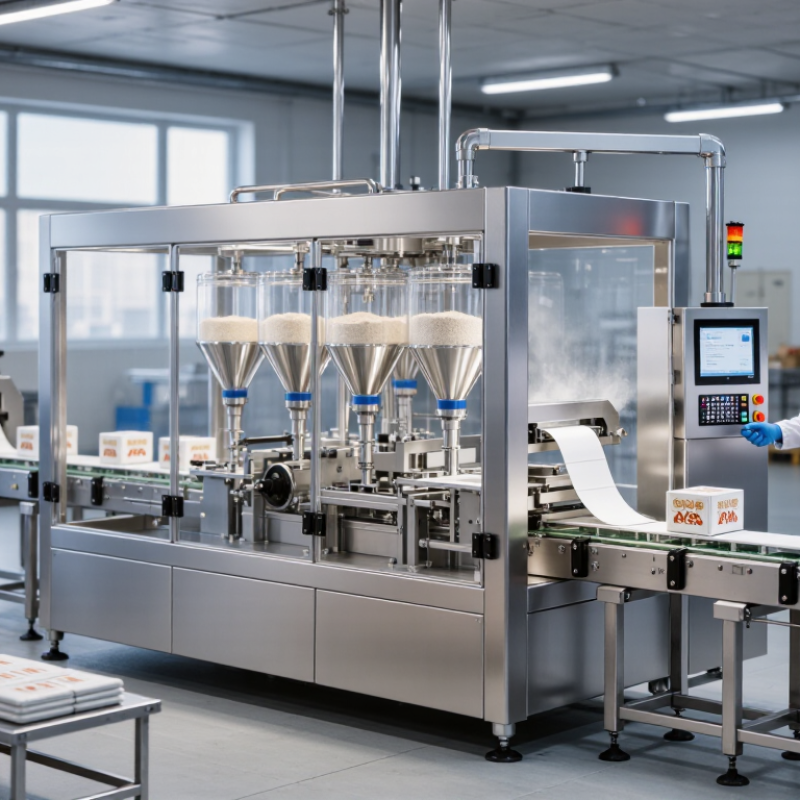
A stick pack packaging machine converts a continuous film roll into narrow, sealed sachets. It unwinds the film, aligns printed marks, and shapes the film around a forming tube. A dosing system then fills each tube with powder, granules, or liquid. Heated jaws create the longitudinal and cross seals. A cutting unit separates finished packs. Simple in theory. Messier in production.
Machine selection should begin with the product, not the advertised speed. Auger fillers suit many powders, while volumetric cups handle consistent granules. Liquids often require piston or pump-based dosing. Check fill accuracy, film compatibility, seal temperature, and cleaning access. PMMI reported approximately 10.2 billion dollars in U.S. packaging machinery shipments during 2023, showing strong investment in automated equipment. However, faster is not always better. A high-speed machine may create more waste when the powder bridges or the film stretches.
Sustainability also needs practical judgment. The OECD’s Global Plastics Outlook reported that only 9% of plastic waste was recycled globally in 2019. Therefore, ask whether the machine can process thinner structures or approved recyclable films. Confirm this through real product trials. Request measurable results for weight variation, seal strength, changeover time, and reject rates. A supplier’s demonstration can look perfect. Your product may disagree. Leave room for that possibility.
Which Product and Package Characteristics Should You Evaluate?
How to Choose a Stick Pack Packaging Machine in 2026?
Product behavior should guide the machine, not the advertised speed. Powder, granules, and liquids require different dosing systems. A fine powder may bridge inside the hopper, while oil can creep into the seal area. Check bulk density, particle size, flowability, viscosity, moisture, and temperature. Small differences matter. Smithers forecasts the global flexible packaging market will grow from about US$278.6 billion in 2023 to approximately US$305 billion by 2028. This growth increases demand for consistent, lightweight stick packs, but it also raises quality expectations.
Package characteristics need equal attention. Define the stick length, width, fill weight, film thickness, and required barrier against oxygen, moisture, or light. Ask for a film trial using the actual laminate, because laboratory samples can hide sealing problems. The sealing window should tolerate dust, wrinkles, and normal material variation. A machine may reach high cycles per minute, yet poor film tracking can waste thousands of packs. PMMI’s 2024 State of the Industry report highlights flexibility, labor pressure, and automation as key packaging investment drivers. However, faster automation is not always better for fragile powders or frequent product changes.
Evaluate changeover time, cleaning access, dose accuracy, reject rates, and available production data. Request results from products with similar density and viscosity. Do not guess. I would also test ten consecutive production runs, not one impressive demonstration. That extra discipline can reveal drifting weights, weak seals, or film damage. Some decisions remain imperfect, especially when future products are unknown. Build adjustable dosing and sealing controls into the specification.
How to Compare Machine Types, Speeds, and Filling Systems
How to Choose a Stick Pack Packaging Machine in 2026?
When comparing stick pack machines, start with the product, not the advertised speed. Single-lane systems suit modest output and frequent product changes. Multi-lane machines can produce more packs per minute, but they need more floor space and careful alignment. Continuous-motion machines usually support higher speeds. Intermittent systems may offer simpler control and gentler handling. Faster is not always better.
The filling system must match the product’s texture and flow. Auger fillers work well with powders that bridge easily, such as fine nutritional mixes. Volumetric cup fillers suit free-flowing granules with consistent density. Pump fillers handle liquids, syrups, and some viscous products. Weigh-based filling can improve accuracy, but it may reduce speed and increase control complexity. Test real samples before choosing. Laboratory results can mislead.
Speed claims need practical interpretation. Ask whether the stated rate includes sealing, cutting, coding, and rejected packs. A machine rated at 120 packs per minute may run slower after film changes or during cleaning. Check the changeover time, filling tolerance, film width, and seal temperature range. Operators should reach key components without awkward movements. Small details matter.
In my experience, the best comparison includes a live trial with the intended film and product. Measure output for one full hour, not five minutes. Record waste, weight variation, and stoppages. I would also question unusually perfect figures. Real production is rarely perfect. A slightly slower machine may deliver steadier quality, easier maintenance, and fewer interruptions.
How to Choose a Stick Pack Packaging Machine in 2026? - How to Compare Machine Types, Speeds, and Filling Systems
| Machine Type | Typical Stick-Lane Configuration | Typical Output Range* | Common Filling Systems | Best Suited Products | Main Advantages | Key Limitations |
|---|---|---|---|---|---|---|
| Single-lane stick pack machine | 1 lane | Approximately 20–60 packs/min | Auger, piston, pump, or volumetric cup | Small production runs, pilot products, specialty powders and liquids | Lower initial investment; straightforward changeovers; compact footprint | Limited production capacity; higher packaging cost per pack at larger volumes |
| Multi-lane stick pack machine | 2–20 lanes, depending on format and product | Approximately 60–1,200 packs/min | Auger, multi-head scale, piston, pump, or volumetric system | High-volume powders, granules, liquids, gels, and instant beverages | High throughput; efficient use of floor space; suitable for continuous production | Higher capital cost; more complex cleaning, setup, and maintenance |
| Intermittent-motion machine | Usually 1–10 lanes | Approximately 30–500 packs/min | Auger, piston, cup, or time-pressure filling | Products requiring controlled sealing and accurate dosing | Good seal control; flexible format adjustment; generally easier to inspect | Lower maximum speed than continuous-motion systems; more start-stop movement |
| Continuous-motion machine | Usually 4–20 lanes | Approximately 200–1,200 packs/min | High-speed auger, pump, piston, or multi-lane volumetric filling | Stable, free-flowing products in long production campaigns | High line efficiency and strong output potential | Less tolerant of inconsistent product flow; more demanding setup and synchronization |
| Servo-driven stick pack machine | Single- or multi-lane | Approximately 60–1,000+ packs/min | Auger, piston, pump, or electronic volumetric dosing | Applications needing repeatable dosing, recipe control, and quick adjustments | Precise motion control; recipe storage; adjustable sealing and cutting timing | Higher purchase price; requires trained operators and electrical support |
| Filling System | Typical Product Type | Typical Fill Range | Accuracy Potential* | Important Selection Factors |
|---|---|---|---|---|
| Auger filler | Powders, including fine or cohesive powders | Approximately 0.5–100 g per stick, depending on screw and product | Often around ±1–3% under controlled conditions | Bulk density, flowability, dust control, screw design, and product aeration |
| Volumetric cup filler | Free-flowing granules and uniform particles | Approximately 1–100 g per stick | Often around ±1–3% when particle size and density are consistent | Particle size distribution, bulk density, bridging, and segregation risk |
| Piston filler | Viscous liquids, creams, sauces, and pastes | Approximately 1–100 ml per stick | Often around ±0.5–2% under stable conditions | Viscosity, temperature, particulates, nozzle size, and cleanability |
| Liquid pump filler | Low- to medium-viscosity liquids | Approximately 0.5–100 ml per stick | Often around ±0.5–2% under controlled conditions | Pump compatibility, foaming, drip prevention, temperature, and sanitary design |
| Multi-head weighing system | Irregular or mixed dry products | Commonly 5–500 g per stick, depending on configuration | Often around ±0.5–2% for suitable products | Target weight, product fragility, speed, hopper size, and combination accuracy |
*The speed, fill-range, and accuracy figures are typical planning ranges rather than guaranteed performance. Actual results depend on product characteristics, stick dimensions, film, sealing temperature, dosing method, operator skill, and required quality standards.
Which Automation, Material, and Safety Features Matter Most?
How to Choose a Stick Pack Packaging Machine in 2026?
The right automation level depends on product flow, labor skills, and the consistency required on every shift. In plant trials, servo-driven filling usually improves dose control and reduces adjustment time. However, complex systems can frustrate operators when recipes are poorly designed. Choose clear touchscreen controls, password levels, automatic film tracking, and simple changeover guides. Useful sensors detect empty lanes, film wrinkles, weak seals, and incorrect product weight. Data logging also helps maintenance teams identify repeated stoppages instead of guessing.
Material selection deserves equal attention. Confirm that the machine handles the chosen laminate, paper-based structure, or recyclable film without unstable sealing. Ask for tests using the actual product and film. Different powders may create dust, bridging, or inconsistent filling. A heated jaw with accurate temperature control can protect seal quality. Still, higher heat is not always better. It may distort sensitive film or damage the package appearance. Check barrier performance, stiffness, seal range, and end-of-roll behavior before purchase.
Safety features should be visible and practical. Guard doors need reliable interlocks, and emergency stops must be easy to reach. Dust extraction, smooth stainless surfaces, and tool-free access can improve hygiene and cleaning time. Operators should not reach around a guard to clear a blockage. That signals poor design. Review noise levels, hot-surface protection, electrical documentation, and training materials with the equipment team. I would also request a long production test, because a machine can look excellent for one hour and reveal serious weaknesses by the afternoon.
How to Assess Costs, Maintenance, Suppliers, and Future Expansion
How to Choose a Stick Pack Packaging Machine in 2026?
Choosing a stick pack packaging machine in 2026 requires more than comparing purchase prices. Build a five-year cost model before requesting quotations. Include film waste, electricity, compressed air, labor, spare parts, and planned service visits. A cheaper machine may consume more film during changeovers. Measure this with sample runs, not promises. Ask for output data using your actual powder, granule, or liquid products. Check filling accuracy, sealing strength, and reject rates under realistic production conditions.
Maintenance planning can protect your budget. Can technicians reach the sealing jaws without removing half the machine? Request maintenance intervals, lubrication points, fault logs, and spare-part prices in writing. Remote support is useful, but it cannot replace skilled local service. Ask suppliers for references, factory acceptance testing, operator training, and clear response times. I would question suppliers who provide only polished videos. Still, even a careful estimate can miss hidden downtime during changeovers. Leave room for that risk.
Future expansion deserves practical attention. A line running two lanes today may need four lanes tomorrow. Check whether the frame, electrical system, control software, and conveyors can support added capacity. Confirm compatibility with future film widths and product formats. Do not pay for every possible option. However, reserve physical space and connection points early. Test the machine with current materials and likely future materials. Document every assumption, then review it after real production begins.
FAQS
It turns a continuous film roll into narrow, sealed sachets. The machine unwinds, forms, fills, seals, and cuts the film. Simple in theory. Production can be messy.
A dosing system places powder, granules, or liquid into formed film tubes. Heated jaws create longitudinal and cross seals. A cutting unit separates finished packs.
Auger fillers often suit fine powders that bridge or flow poorly. Real samples should be tested before selection. Laboratory results can mislead.
Volumetric cups suit free-flowing granules with consistent density. Pumps or pistons handle liquids and some viscous products. Product texture matters most.
Single-lane systems suit modest output and frequent product changes. Multi-lane machines produce more packs but need more space and alignment control. More lanes mean more complexity.
No. A machine rated at 120 packs per minute may slow during cleaning, film changes, or product adjustments. Faster is not always better.
Run the intended product and film for one full hour. Measure output, weight variation, waste, stoppages, seal strength, and reject rates. Five minutes is insufficient.
Check film width, seal temperature range, stretching behavior, and final seal strength. Ask whether thinner or approved recyclable films can run reliably. Confirm with trials, not promises.
Operators should reach filling parts, sealing jaws, and cleaning areas without awkward movements. Easy access reduces downtime. I would still question overly perfect demonstrations.
Choosing based on advertised speed instead of product behavior. A slightly slower machine may produce steadier quality and fewer interruptions. That trade-off deserves reflection.
Conclusion
Choosing the right Stick Pack Packaging Machine requires a clear understanding of both your product and your production goals. These machines form, fill, and seal narrow packets in a continuous process, making them suitable for powders, liquids, granules, and other free-flowing products. Before selecting a model, evaluate product properties such as density, viscosity, particle size, moisture sensitivity, dosing accuracy, packet dimensions, packaging material, and required shelf life.
A practical comparison should include machine type, lane configuration, filling system, output speed, accuracy, changeover time, and compatibility with future products. Automation features, sensor systems, user-friendly controls, material efficiency, cleaning access, and essential safety functions can significantly influence daily performance. Buyers should also consider the total cost of ownership, including purchase price, energy use, spare parts, maintenance, training, and technical support. Selecting a reliable supplier and allowing room for capacity expansion will help ensure that the packaging solution remains efficient, adaptable, and cost-effective as production needs develop.

Blog Tags: