Packaging Machine Industry Blog – SIA Concordia
Packaging Technology News – SIA Concordia
Industry Insights & Guides

Packaging Machine Blog & News

Expert knowledge, equipment selection advice, and technical trends in VFFS, Doypack, Multilane, and Flow Wrap systems.

0%

Choosing a rotary doypack machine in 2026 requires more than comparing speed, price, and attractive product photos. A suitable Rotary Doypack Packaging Machine must match your pouch dimensions, materials, filling accuracy, sealing requirements, and daily production rhythm. A machine designed for 100-gram snack pouches may perform poorly with heavy pet food bags or liquid products. Small details matter. Film tension, zipper alignment, seal temperature, and changeover time can strongly affect output.

Real production experience offers useful lessons. Ask suppliers for test runs using your actual pouch film and product. Watch the machine form, fill, seal, and discharge each package. Check whether operators can adjust settings without excessive downtime. Reliable equipment should provide stable servo control, accessible components, clear safety guarding, and documented maintenance procedures. Independent certifications and responsive technical support also deserve careful attention. Claims alone are not evidence.

Do not choose the fastest model automatically. A higher rated speed may create more rejects when the product contains dust, uneven pieces, or variable moisture. That assumption can fail. Consider realistic operating speed, waste levels, cleaning access, and future product changes. Review electrical standards, hygienic design, and applicable packaging regulations in your target markets. A machine that looks efficient in a showroom may become expensive after installation.

There is no perfect choice.

This guide explains the main evaluation points for selecting a rotary doypack machine in 2026. It focuses on practical testing, measurable performance, supplier reliability, and long-term operating value. Expect some trade-offs. That is normal.

How to Choose a Rotary Doypack Machine in 2026?

Understanding Rotary Doypack Machines and Their Main Applications

How to Choose a Rotary Doypack Machine in 2026?

Understanding Rotary Doypack Machines and Their Main Applications

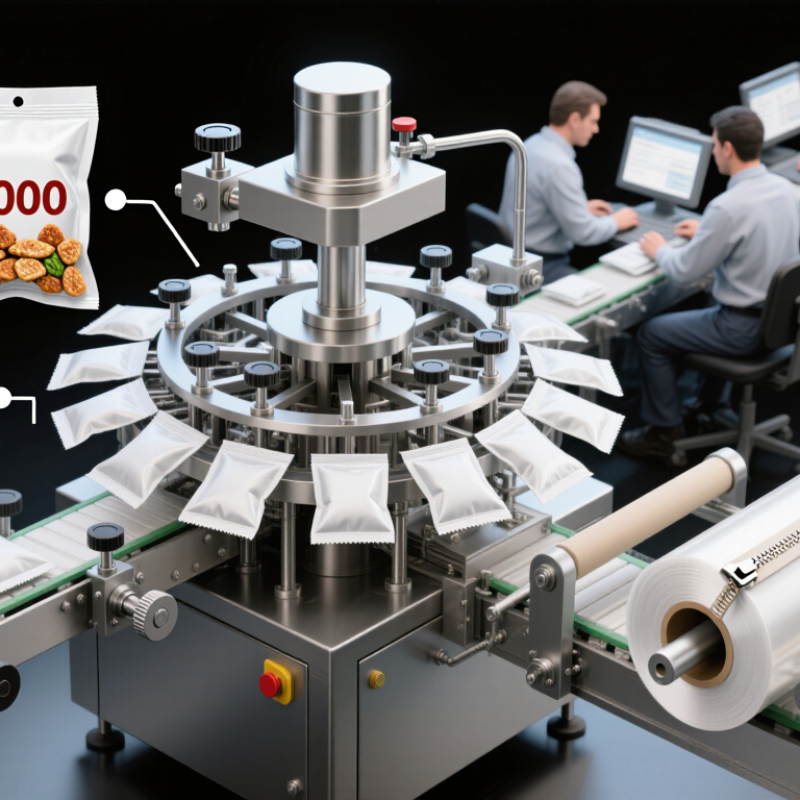
A rotary doypack machine moves pouches through several stations on a circular indexing table. Each station performs one task. Common steps include pouch loading, opening, filling, sealing, coding, and discharge. This layout supports steady output while keeping operations compact. It suits snacks, grains, frozen foods, powders, pet food, detergents, and personal care products. Different products demand different dosing systems. Granules may need a combination weigher. Liquids need controlled pumps. Fine powders often require dust management and auger dosing.

Choosing a machine starts with the pouch, not the advertised speed. Check pouch width, height, zipper style, film structure, and seal area. Ask for trials using your actual product. Watch the seal closely. Wrinkles, powder contamination, or weak corners can cause costly rejects. In daily production, easy cleaning and tool-free changeovers matter more than impressive brochure numbers. Servo control, photoelectric sensors, and clear fault messages can improve repeatability. Yet sensors do not replace trained operators. That is easy to forget.

Think about future needs. A machine handling only one format may become restrictive after a product launch. Leave room for extra filling heads, gas flushing, or inspection equipment. Confirm spare-part availability, documentation, safety guarding, and local technical support. A practical acceptance test should measure fill accuracy, seal strength, changeover time, and sustained performance. Faster is not always better. A slower, stable machine may protect materials, labor, and customer trust.

How to Choose a Rotary Doypack Machine in 2026? - Understanding Rotary Doypack Machines and Their Main Applications

Practical selection guide for rotary premade-pouch machines. Figures are typical industry ranges and vary by pouch design, product characteristics, and machine configuration.
Selection Dimension Typical Data or Range Best-Fit Application What to Check Before Purchase
Machine Format Rotary intermittent or continuous-motion system using premade doypack pouches Flexible packaging lines requiring repeatable pouch opening, filling, sealing, and discharge Confirm pouch feeding, orientation, zipper handling, and compatibility with the planned filling system
Typical Output Approximately 20–80 pouches per minute for many standard configurations; higher rates may be possible with suitable products and pouch sizes Medium- to high-volume production of snacks, pet food, powders, granules, and household products Evaluate actual filled pouches per minute, not only machine cycles; account for multi-lane filling, product dust, and changeovers
Pouch Width Commonly about 80–320 mm, depending on the machine model and tooling Small snack packs through medium and large stand-up retail pouches Match the usable pouch width, gusset dimensions, zipper position, and spout location to the planned package range
Pouch Height Commonly about 100–450 mm, with the permitted range determined by gripper spacing and tooling Single-serve, family-size, and bulk retail doypacks Test the shortest and tallest pouch planned for production, including filled-pouch stability at discharge
Filling Range Roughly 10 g to 5 kg, depending on the selected auger, cup, pump, or combination weigher Powders, granules, liquids, pastes, snacks, frozen foods, and irregular solids Select the filler from product density, flowability, particle size, viscosity, target weight, and allowable giveaway
Sealing Options Heat-sealed top; optional zipper, spout, degassing valve, gas flush, or hot-air cleaning systems Resealable snacks, liquid products, coffee, sauces, detergents, and products requiring extended shelf life Verify film sealant layer, sealing temperature window, seal width, leak-test method, and zipper or spout integration
Pouch Materials Compatible structures may include PE, PP, PET/PE, PET/CPP, high-barrier laminates, paper-laminate structures, and recyclable mono-material films Dry foods, coffee, pet food, personal care, chemicals, and other heat-sealable products Obtain the film specification and confirm seal temperature, coefficient of friction, stiffness, thickness, and barrier requirements
Product Compatibility Dry and free-flowing products generally enable the highest throughput; sticky, fragile, dusty, or viscous products require specialized dosing and cleaning features Granules, powders, liquids, sauces, snacks, pet food, and non-food consumer products Run trials using the real product to measure bridging, dust, splashing, product damage, fill accuracy, and seal contamination
Changeover Time Often about 20–60 minutes for routine format changes when quick-release parts and recipe controls are provided Facilities producing multiple pouch sizes, recipes, or product types Ask for a demonstrated changeover using the actual formats, including cleaning, jaw adjustment, filler exchange, and recipe loading
Filling Accuracy Commonly within approximately ±0.5% to ±2% for suitable products and correctly configured dosing equipment Applications where legal metrology, giveaway control, or consistent serving size is important Define the target accuracy, sampling plan, applicable local regulations, and whether accuracy refers to the filler or the complete line
Automation and Inspection PLC/HMI controls, recipe storage, no-pouch-no-fill, no-pouch-no-seal, checkweigher, metal detection, vision inspection, and reject systems may be integrated Traceable food, pharmaceutical, cosmetic, and export-oriented production Check data export, alarm history, electronic access levels, inspection sensitivity, reject confirmation, and line communication protocols
Utilities Electrical power commonly around 3–12 kW; compressed-air demand often about 0.5–1.0 MPa, depending on options and machine size Plants with stable electrical supply and properly sized, clean compressed air Confirm voltage, phase, air pressure, air consumption, filtration, exhaust requirements, and local safety compliance
Hygiene and Cleanability Stainless-steel product-contact areas, sloped surfaces, tool-free access, dust extraction, and washdown-rated components may be available Food, pet food, pharmaceutical, nutraceutical, and cosmetic production Review clean-in-place limits, dismantling time, ingress protection, allergen-control procedures, and product-contact material certificates
Main Applications Snacks, coffee, tea, rice, grains, pet food, powders, frozen foods, sauces, detergents, cosmetics, and industrial granules Products requiring a stable stand-up pouch, resealability, high barrier, portion control, or attractive shelf presentation Confirm whether the product needs oxygen reduction, liquid-tight sealing, anti-static control, gentle handling, or dust containment
Selection Priority for 2026 Prioritize flexible format range, verified throughput, fast changeover, energy efficiency, recyclable-film capability, digital monitoring, and serviceability Manufacturers seeking lower operating cost, reduced material waste, improved traceability, and greater SKU flexibility Base the decision on total cost of ownership, validated production trials, spare-parts availability, operator training, and preventive-maintenance support

Note: Performance depends on pouch dimensions, material construction, product properties, dosing technology, sealing conditions, operator skill, and regulatory requirements.

Assessing Product, Pouch, and Packaging Requirements

How to Choose a Rotary Doypack Machine in 2026?

Product behavior should guide the machine decision. Powder, granules, liquids, and sauces demand different dosing systems. Viscous products may need servo pumps. Free-flowing grains usually suit multi-head weighers. Sticky fillings can contaminate the sealing area. That small detail can create expensive rejects. Confirm target weight, temperature, density, and oxygen sensitivity before requesting quotations. According to the Flexible Packaging Association’s 2024 industry report, U.S. flexible packaging sales reached approximately $31.5 billion in 2023. This scale reflects strong demand, but it also increases pressure for reliable seals and lower waste.

Pouch construction matters just as much. Test the exact film, laminate, zipper, spout, and pouch dimensions on the rotary platform. Recyclable mono-material films may require different sealing temperatures and dwell times. A wider gusset can improve stability, yet it may reduce usable machine speed. The machine should support accurate indexing, simple format changes, clean access, and traceable fault detection. PMMI industry research repeatedly identifies labor availability and operational efficiency as major packaging concerns. Therefore, automatic pouch feeding and fast changeovers deserve practical attention, not only attractive specifications.

Do not trust brochure speed alone. Run a factory acceptance test with real product and production film. Measure giveaway, seal strength, dust leakage, and rejected pouches. I would not pretend every laboratory result predicts factory performance. It does not. Ask for several hours of continuous operation. A short demonstration can hide heat buildup, difficult cleaning, or inconsistent dosing. The right rotary doypack machine fits the product first, then the pouch, and finally the planned production rhythm.

Comparing Machine Configurations, Speeds, and Filling Systems

How to Choose a Rotary Doypack Machine in 2026?

Choosing a rotary doypack machine starts with the product, not the advertised speed. A compact eight-station configuration may suit small batches and frequent format changes. Larger stations can provide smoother output, but they need more floor space and careful maintenance. In practical testing, quoted speed often differs from stable production speed. Film stiffness, pouch size, sealing temperature, and operator adjustments all affect performance. Faster is not always better.

Filling systems must match the product’s behavior. Auger fillers work well for powders, while multihead weighers suit many free-flowing solids. Pumps handle liquids, but thick sauces may require heated hoppers or wider product paths. For sticky products, cleaning access matters as much as filling accuracy. I have seen machines lose productive hours because a small residue hardened inside an awkward valve. That detail is easy to miss.

Tips: Request a running test with your actual pouch film and product. Measure acceptable speed after sealing, inspection, and rejects. Check whether tool-free changeovers are genuinely practical. Ask for recorded noise levels and compressed-air consumption. Leave room for future pouch sizes, even if the first project seems fixed. A machine can meet today’s target and still create tomorrow’s limitation. Review maintenance records, safety features, and calibration procedures before signing.

Evaluating Sealing Quality, Automation, and Material Compatibility

How to Choose a Rotary Doypack Machine in 2026?

Sealing quality should be your first practical test. Inspect the seal width, pressure, temperature, and dwell time. A strong seal looks even, clean, and continuous. Test filled pouches, not empty film. Product dust can create tiny leak paths. Use burst testing, dye testing, and repeated production samples. Record results across several shifts. One perfect sample proves very little.

Automation affects consistency more than speed alone. Servo-driven filling, automatic film tracking, and recipe storage can reduce operator adjustments. Check whether the control system records temperature changes and rejects defective pouches. Ask for changeover demonstrations with real pouch sizes. A machine may appear simple during a showroom test. Factory conditions are less forgiving. I have seen fast equipment lose accuracy after careless setup.

Material compatibility needs careful validation. Compare laminated films, recyclable structures, foil-based films, and high-barrier materials. Their sealing windows can differ sharply. Ask for trials using your actual film, product, and target speed. Check seal strength after cooling, stacking, and transport simulation. Also inspect wrinkles near the zipper or spout. These details often expose weak alignment. Supplier claims are useful, but measured trial data is more reliable. Allow time for retesting. A rushed approval can become an expensive lesson.

How to Choose a Rotary Doypack Machine in 2026?

Suggested evaluation weighting for sealing quality, automation, and material compatibility

Sealing quality receives the highest weighting because seal integrity directly affects leakage, shelf life, and product safety. Automation is evaluated through recipe control, sensor feedback, alarm handling, and traceability. Material compatibility covers the machine’s ability to process common multilayer laminates, mono-material PE or PP structures, and different pouch thicknesses without unstable sealing or excessive adjustments.

The percentages are a practical, transparent scoring framework for comparing machine specifications and factory test results; they are not supplier or brand performance data.

Checking Supplier Support, Total Cost, and Future Expansion Needs

How to Choose a Rotary Doypack Machine in 2026?

A rotary doypack machine should be judged beyond its purchase price. PMMI’s 2024 State of the Industry report places U.S. packaging machinery shipments above $10 billion annually. That scale reflects continued automation investment, but support quality still separates smooth production from expensive downtime. Ask suppliers for response times, spare-parts availability, remote diagnostics, and technician training. Request service records from similar installations. A polished demonstration proves little.

Total cost needs a wider lens. Include tooling, change parts, compressed air, electricity, labor, maintenance, software updates, and rejected packs. A machine running at 70 packs per minute may outperform a faster unit if changeovers waste less time. Smithers’ flexible-packaging research forecasts continued global market growth through 2028, increasing pressure to handle more formats and sustainable materials. Your machine should allow controlled trials with different films, seal structures, pouch sizes, and filling systems.

Tips:

Build a five-year cost model. Measure changeover minutes. Price critical spares. Confirm installation support in writing. Leave space for another filling lane or inspection module. I once underestimated operator training costs; the machine was capable, but production remained inconsistent. That mistake is easy to repeat. Ask suppliers to show expansion steps, not just future promises. A modular frame, accessible controls, and documented software interfaces can protect tomorrow’s investment.

FAQS

What does a rotary doypack machine do?

It moves pouches around a circular indexing table. Each station performs one task. Typical steps include loading, opening, filling, sealing, coding, and discharge. The layout saves floor space. It also supports steady production.

Which products can these machines handle?

They can package snacks, grains, frozen foods, powders, pet food, detergents, and personal care products. Product behavior determines the dosing system. Granules often use combination weighing. Liquids need controlled pumps. Fine powders may require auger dosing and dust control.

How should I choose the correct machine in 2026?

Start with the pouch, not the advertised speed. Check its width, height, zipper, film structure, and seal area. Then study the product. Confirm its weight, temperature, density, and oxygen sensitivity. A fast machine may still be a poor fit.

Why is pouch testing so important?

Test the exact pouch, film, zipper, spout, and dimensions. A wider gusset may improve stability. It may also reduce usable speed. Watch for wrinkles near corners and zippers. Small details matter.

How can sealing quality be evaluated?

Test filled pouches, rather than empty film. Inspect seal width, pressure, temperature, and dwell time. The seal should look even, clean, and continuous. Use burst testing and dye testing. Repeat samples across several shifts. One perfect pouch proves little.

What should a factory acceptance test include?

Use the real product and production film. Measure fill accuracy, giveaway, seal strength, dust leakage, and rejects. Run the machine for several continuous hours. A short demonstration can hide heat buildup. It can also hide difficult cleaning. I would not trust a quick trial alone.

Which automation features are genuinely useful?

Servo filling, film tracking, recipe storage, and clear fault messages can improve consistency. Photoelectric sensors can support accurate indexing. The controls should record temperature changes and rejected pouches. Tool-free changeovers save time. Sensors do not replace trained operators.

What future requirements should I consider?

Leave room for extra filling heads, gas flushing, or inspection equipment. A machine for one pouch format may become restrictive later. Confirm spare parts, documentation, guarding, and local technical support. Easy cleaning matters every day. I may be too optimistic, but planning early usually costs less.

Conclusion

Choosing the right rotary doypack machine in 2026 requires a clear understanding of your products, pouch formats, production goals, and long-term business plans. A Rotary Doypack Packaging Machine should be selected according to the characteristics of the material being packed, including its viscosity, particle size, temperature, and filling accuracy requirements. You should also evaluate pouch dimensions, packaging materials, closure styles, and the level of flexibility needed for different product ranges.

Machine speed and configuration must match your expected output without compromising filling precision or sealing quality. Consider suitable filling systems, reliable pouch handling, automatic adjustment functions, and compatibility with recyclable or multilayer packaging materials. Equally important are user-friendly controls, inspection features, maintenance access, and stable operation. Before making a final decision, compare the supplier’s technical support, spare-parts availability, installation services, training, energy use, and total ownership cost. Selecting a scalable solution can also make future capacity upgrades and product expansion easier.

Vivienne

Vivienne

Vivienne is a dedicated marketing professional with extensive experience in product communication, market research, content strategy, and customer engagement. As a key contributor to the company’s digital presence, she regularly publishes insightful articles on the corporate website, helping......