Packaging Machine Blog & News
Expert knowledge, equipment selection advice, and technical trends in VFFS, Doypack, Multilane, and Flow Wrap systems.
A Multihead Weigher Packaging Machine can look impressive on a showroom floor. The real test comes later: can it portion sticky dried fruit, small frozen pieces, or fragile snacks accurately at your required speed? Choosing well means matching the machine to the product, target weight, packaging format, and available floor space—not simply comparing headline speeds.
Industry reports offer useful context. PMMI’s 2024 State of the Industry report examines packaging machinery trends, including automation and operational pressures facing manufacturers. Those pressures make practical checks essential: ask suppliers for product-specific trials, recorded giveaway data, and changeover times. A polished brochure is not a production test. For broader investment context, PMMI’s reports on automation in packaging and processing also discuss manufacturers’ drive toward more flexible, automated operations. Use these sources to frame questions, then verify claims against your own product and line conditions.
A note on expert attribution: I can’t verify a named specialist’s published quotation on this exact buying decision, so I won’t invent one. A sound expert principle, stated here as editorial guidance rather than a quotation, is simple: test the product you actually plan to run. Check whether the contact parts suit its shape and texture, whether operators can clean and adjust the machine, and whether the controls integrate with your packaging line. Small details matter. A handful of extra grams per pack can become substantial product giveaway over a long shift. The seven tips ahead focus on these measurable trade-offs, helping buyers compare accuracy, speed, hygiene, flexibility, service, and total operating cost with clearer evidence.
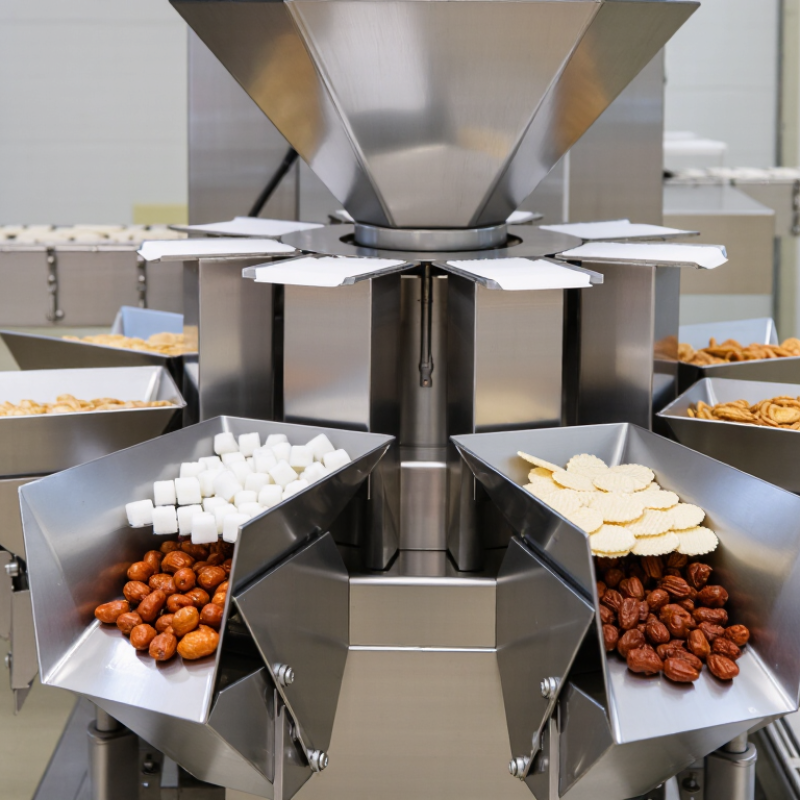
Define Product Characteristics and Target Weight Requirements
A multihead weigher should match the product, not just the package format. Note the product’s shape, size, density, and flow. Dried pieces may tumble freely, while sticky or oily foods can cling to contact surfaces. Fragile items may chip when dropped between weighing heads. Small details matter. Check how the product behaves after storage, too; temperature and moisture can change its flow.
Tip: Define the target weight and acceptable variation before comparing machines. A 250-gram pack with a narrow tolerance needs a different setup from one with a wider range. Also record the required packs per minute. Higher output targets can affect the number of weigh heads and product-feed settings. Test real samples, not only clean, uniform pieces. A tidy lab sample can mislead.
Share several representative batches with the equipment supplier, including unusually large, small, or clumped pieces. Ask for trial results at your target speed and weight, and check both accuracy and product damage. Keep a note of the settings used. One limitation: trial conditions may not fully reflect a busy production line. Recheck performance during a longer run before finalizing the machine specification.
| Product Example | Typical Product Characteristics | Example Target Pack Weight | Key Weighing Considerations | Practical Machine Requirements |
|---|---|---|---|---|
| Potato chips | Light, fragile, irregular pieces; may break or generate crumbs during handling. | 150 g | Limit product drop height and avoid excessive vibration or repeated handling. | Use gentle product distribution, cushioned contact surfaces, and a suitable chute design. |
| Frozen peas | Small, free-flowing pieces; cold and potentially wet product can create buildup. | 500 g | Consider product temperature, moisture, bridging, and sanitation requirements. | Specify washdown suitability where required and choose surfaces that are easy to clean. |
| Whole almonds | Hard, relatively free-flowing pieces with variation in size and individual weight. | 200 g | Piece-size variation affects the available combinations and final-weight consistency. | Confirm that the feeder and weigh hoppers can handle the expected nut size without jamming. |
| Gummy candies | Small, sticky pieces that may clump, especially in warm or humid conditions. | 100 g | Product adhesion can disrupt feeding and cause residue to accumulate on contact surfaces. | Evaluate hopper surface finish, product conditioning, and cleaning access with actual samples. |
| Dry pasta | Long, brittle shapes can overlap, bridge, or break when transferred. | 500 g | Product length and orientation can affect feeding, hopper filling, and discharge. | Check that hopper openings and discharge paths suit the longest pasta pieces. |
| Ground coffee | Fine, aerated material that can produce dust and settle after filling. | 250 g | Bulk density may vary with grind, aeration, and handling, affecting volume and flow. | Test product feeding and dust control; coordinate weighing performance with the filling process. |
| Mixed snack pieces | Combination of different shapes, sizes, densities, and fragility levels. | 300 g | Segregation during distribution may cause inconsistent proportions in each pack. | Assess the distribution system and run trials using the actual product mix and recipe. |
| Target weight and acceptable limits | Pack-weight requirements depend on the product, package format, and applicable regulations. | Set the nominal target from the pack specification; do not assume one universal tolerance. | Define permitted limits, checkweigher settings, and the required weighing accuracy before selection. | Validate performance with representative product, pack weights, operating speed, and production conditions. |
| Examples are starting points only. Confirm product behavior and performance requirements through trials with the actual product and packaging. Applicable net-quantity regulations and measurement rules vary by market. | ||||
FAQS
Check shape, size, density, and flow. Sticky pieces may cling, while fragile pieces can chip during drops. Storage temperature and moisture can also change how products move.
A 250-gram pack with a narrow tolerance may need different settings from one with a wider range. Set the acceptable variation and packs-per-minute target before comparing machines.
Provide several real batches, including unusually large, small, or clumped pieces. Uniform samples alone can give a misleading result. Test the actual product.
Check accuracy, product damage, and output at your target speed and weight. Record the settings used. A short trial may not reflect a busy production shift.
Measure floor space, conveyor widths, and product-drop height. Check the infeed elevator, bagger, discharge chute, and downstream checkweigher. A high chute can make pieces bounce.
Confirm electrical supply, cleaning access, and control signals for starts, stops, and faults. Map the operator’s route to the control panel. Brochure speed is only part of the picture.
Ask how quickly operators can change target weights, combination limits, and product recipes. Check that settings are clear and protected from accidental edits. Changeover time matters.
Make sure routine-cleaning parts are reachable without awkward lifting. Test sticky or fragile products where possible, and leave room for adjustments after installation. No layout is perfect.
Conclusion
Choosing the right Multihead Weigher Packaging Machine starts with understanding the product and its target weight. Consider characteristics such as size, shape, texture, and flow behavior, then select a weighing range and configuration suited to the required portion sizes. The machine’s speed and accuracy should also match production goals, helping maintain consistent weights without creating a bottleneck or unnecessary giveaway.
Before making a decision, check that product-contact surfaces and cleaning procedures suit your hygiene requirements and make routine sanitation practical. Confirm the machine can integrate with your packaging line and accommodate changes in products, pack sizes, or operating needs. Finally, compare maintenance requirements, availability of technical support and spare parts, and the total cost of ownership—not just the initial purchase price. A careful assessment of these factors can help you choose equipment that fits both current production demands and future plans.